
Suzuki 250 HP Outboard: Best DF250 V6 Models & Prices (2026)
A Suzuki 250 hp outboard comes in two quite different engines that share the same badge. The DF250T is a 3.6-litre (3,614 cc) V6 with mechanical controls, weighing 264 to 284 kg depending on shaft. The DF250AP is a bigger 4.0-litre (4,028 cc) V6 with Suzuki Precision Control drive-by-wire, Selective Rotation and Lean Burn, weighing 290 to 299 kg (Suzuki Marine: DF250 specifications; Suzuki Marine: DF250AP specifications). We stock 14 versions from $17,935 to $20,025, in 20, 25 and 30-inch shafts, in black, white and SS Series matte black, and we deliver worldwide.
This guide explains how the two engines differ, how to decode the model names, which boats each one suits, how a Suzuki 250 compares with Yamaha, Mercury and Honda, and what to check before you order. If you already know the model, skip to the price list or browse the Suzuki 250 HP category.
Table of Contents
Table of Contents
Two Engines, One Name
Here’s the thing most buyers miss. When you search for a Suzuki 250 hp outboard, you’ll find two engines that look similar and make the same rated power, but they are not the same machine.
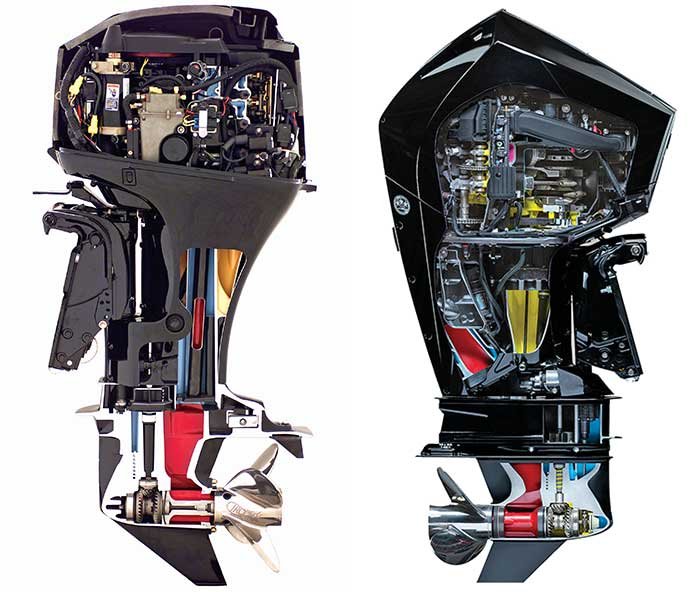
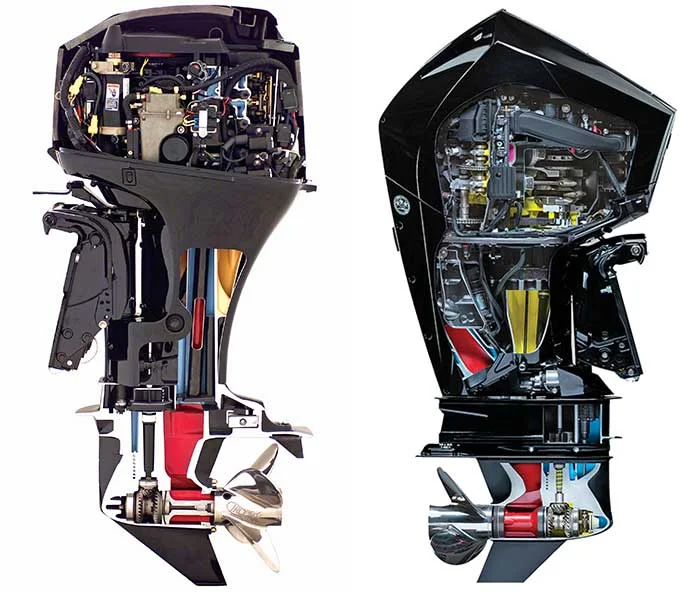
The DF250T is the older design. It uses a 3.6-litre 55-degree V6 with 24 valves, variable valve timing and multi-stage induction, and it’s controlled by ordinary throttle and shift cables. It’s lighter and simpler, and it’s the cheaper of the two.
The DF250AP arrived in 2012. Suzuki announced it in May that year as a 4.0-litre engine sharing its design and technology with the DF300AP, which had just won an NMMA Innovation Award at the Miami boat show (Suzuki global news release, May 2012). The AP adds Lean Burn fuel control, Suzuki Precision Control drive-by-wire and Suzuki Selective Rotation.
Why does it matter? Because the two engines suit different boats and different rigging. A buyer replacing a single cable-controlled engine on a bay boat usually wants the DF250T. A buyer building a twin offshore rig with digital controls usually wants the DF250AP. Pick the wrong one and you either pay for features you can’t use, or end up re-rigging the whole helm.
Suzuki 250 HP Outboard Specifications
These are Suzuki’s published figures for both versions.
| Specification | DF250T (mechanical) | DF250AP (Precision Control) |
|---|---|---|
| Engine | 55-degree V6, DOHC 24-valve | 55-degree V6, DOHC 24-valve |
| Displacement | 3,614 cc (3.6 L) | 4,028 cc (4.0 L) |
| Bore x stroke | 95 x 85 mm | 98 x 89 mm |
| Output | 184.0 kW (250 hp) | 184.0 kW (250 hp) |
| Full-throttle range | 5,500 to 6,100 rpm | 5,500 to 6,100 rpm |
| Gear ratio | 2.29:1 | 2.08:1 |
| Alternator | 12 V, 54 A | 12 V, 54 A |
| Dry weight | 264 kg (L) / 275 kg (X) / 284 kg (XX) | 290 kg (X) / 299 kg (XX) |
| Shaft lengths | 20, 25, 30 in | 25, 30 in |
| Recommended transom | 508 / 635 / 762 mm | 635 / 762 mm |
| Controls | Mechanical cables | Suzuki Precision Control (drive-by-wire) |
| Rotation | Standard or counter (Z model) | Selective (either direction) |
| Fuel control | Multi-point sequential EFI | Multi-point sequential EFI with Lean Burn |
Dry weights exclude propeller and engine oil. Suzuki Australia lists recommended fuel for the DF250T as RON 91, which is AKI 89 (Suzuki Marine Australia: DF250T). Check your owner’s manual for the exact fuel requirement of the engine you buy.


DF250T vs DF250AP: Which Suzuki 250 HP Outboard?
DF250T: lighter, simpler, cheaper
The DF250T is the Suzuki 250 hp outboard to look at first if your boat already has cable controls and you’re running a single engine. It’s 15 kg lighter than the AP on the same 25-inch shaft (275 kg against 290 kg), it comes in a 20-inch L shaft that the AP doesn’t offer, and it costs less. Cables are easy to fix almost anywhere in the world.
The 2.29:1 gear ratio is fairly low for a 250, which helps it spin a decent-sized prop and pull a loaded hull out of the hole. For twin rigs there are dedicated counter-rotating Z models.
Who it suits: single-engine bay boats and centre consoles, mechanical repowers, budget twin rigs and anyone who wants the simplest Suzuki 250 hp outboard to maintain. Start with the DF250TX5 or the DF250TXX5 for taller transoms.
DF250AP: more displacement, smarter controls
The DF250AP gets 414 cc more displacement from a bigger bore and longer stroke. More displacement at the same rated power usually means the engine isn’t working as hard to make it, and gives fuller torque in the mid-range. Add Lean Burn, Precision Control and Selective Rotation and you have a more refined package, at the cost of about 15 kg and a higher price.
Precision Control replaces cables with electronic throttle and shift, which gives smoother shifts and lets you run dual helms and multi-engine rigs without cable runs. Selective Rotation means the same engine can turn either way, so two identical APs make a twin pair.
Who it suits: twin and triple offshore rigs, boats with two helm stations, new builds where you’re fitting a new helm anyway, and owners who run long distances where fuel economy matters most. See the DF250APX5 and the DF250APXX5.
Quick rule: single engine with cables you want to keep, go DF250T. Twins, digital controls or long offshore runs, go DF250AP.
The Technology Explained
Lean Burn (DF250AP)
Lean Burn uses the engine’s sensors to run a leaner mixture when the load is light, mainly at cruise. Suzuki says the DF250AP adopted it to improve fuel economy from low speed through cruising. On the sister DF300AP, Suzuki’s own testing showed it 14% more economical at cruise than the original non-Lean Burn DF300, and Suzuki is careful to add that results depend on boat, load and weather. Our article on how Suzuki Lean Burn works goes into more depth.
Suzuki Selective Rotation (DF250AP)
Selective Rotation lets a standard engine run as a counter-rotating engine with an activation switch and a counter-rotation propeller. It’s a big help for twin rigs, because you don’t need to stock a separate left-hand engine, and a spare can go on either side.
Variable valve timing and multi-stage induction (DF250T)
The DF250T uses variable valve timing and a multi-stage intake that changes the effective length of the intake runners with rpm. In plain terms, it helps the 3.6-litre engine make good torque low down and still breathe at the top end.
Offset driveshaft and gear reduction
Suzuki’s V6 range uses an offset driveshaft that moves the powerhead forward, putting its weight closer to the transom. Both 250s also use low gear ratios for the class (2.29:1 on the DF250T, 2.08:1 on the DF250AP), which let them swing larger propellers.
Water detection, Troll Mode and keyless start
Suzuki lists a water-detecting system that warns you if the fuel filter picks up water, plus optional Troll Mode, keyless start and automatic trim on the V6 range. Troll Mode in particular is worth having if you fish slow.
How to Read Suzuki 250 HP Outboard Model Codes
Take DF250TXXZW5 as an example:
- DF250: 250 hp four-stroke
- T: power trim and tilt, mechanical controls (the 3.6-litre engine). AP means the 4.0-litre engine with Precision Control
- L = 20-inch shaft, X = 25-inch, XX = 30-inch
- Z: counter rotation (DF250T models)
- W: white cowl. No letter means Nebular Black
- SS: SS Series matte black
- 5: model-year suffix
So a DF250TXXZW5 is a white, 30-inch, counter-rotating Suzuki 250 hp outboard with mechanical controls. Our guide to understanding Suzuki outboard model numbers covers the whole range, and long shaft vs short shaft outboard motors explains how to measure your transom.
Every Suzuki 250 HP Outboard We Sell
These are the Suzuki 250 hp outboard listings live on our site right now. Prices are in US dollars and include delivery. Click any model for photos and the full spec sheet.
DF250T: 3.6-litre V6, mechanical controls
| Model | Shaft | Rotation | Finish | Price |
|---|---|---|---|---|
| DF250TLSS5 | 20 in | Standard | SS matte black | $19,065 |
| DF250TX5 | 25 in | Standard | Nebular Black | $18,730 |
| DF250TXW5 | 25 in | Standard | White | $17,935 |
| DF250TXSS5 | 25 in | Standard | SS matte black | $19,420 |
| DF250TXZ5 | 25 in | Counter | Nebular Black | $19,340 |
| DF250TXZW5 | 25 in | Counter | White | $18,515 |
| DF250TXX5 | 30 in | Standard | Nebular Black | $18,075 |
| DF250TXXW5 | 30 in | Standard | White | $18,220 |
| DF250TXXZ5 | 30 in | Counter | Nebular Black | $19,645 |
| DF250TXXZW5 | 30 in | Counter | White | $18,800 |


DF250AP: 4.0-litre V6, Precision Control and Selective Rotation
| Model | Shaft | Finish | Price |
|---|---|---|---|
| DF250APX5 | 25 in | Nebular Black | $19,700 |
| DF250APXW5 | 25 in | White | $19,850 |
| DF250APXX5 | 30 in | Nebular Black | $20,025 |
| DF250APXXW5 | 30 in | White | $19,170 |


For a mechanical twin, pair the DF250TX5 with the DF250TXZ5, or for 30-inch transoms the DF250TXX5 with the DF250TXXZ5. White pairs work the same way: DF250TXXW5 with DF250TXXZW5. For a drive-by-wire twin, two identical APs will do. Prices move with stock, so the product page always shows the current figure.
Which Boats Suit a Suzuki 250 HP Outboard?
Single-engine centre consoles, 22 to 25 feet. This is where most single Suzuki 250 hp outboard installs end up. It’s enough power to carry a full fuel load, a T-top and four anglers offshore with something in reserve.
Big bay boats, 23 to 25 feet. Many larger bay boats are rated at 250 to 300. The DF250TLSS5 and DF250TXSS5 in matte black are the usual picks here, often on a jack plate.
Twin-engine offshore boats, 27 to 33 feet. A pair of Suzuki 250 hp outboard engines gives 500 hp with two-engine redundancy. On these boats the AP’s digital controls and Selective Rotation make the rig neater.
Triples on 34 feet and up. Some bigger centre consoles run three 250s. The centre engine is normally standard rotation.
Large pontoons, tritoons and dual consoles. Heavy performance tritoons and family dual consoles use the extra torque well. Check the rating first; many pontoons top out lower. Read best Suzuki outboards for pontoon boats.
Commercial and patrol boats. Pilot boats, dive boats and patrol RIBs often run twin 250s. Our guide to outboard motors for commercial boats and Suzuki outboards for commercial boats cover duty cycles.
Where it’s the wrong choice: boats rated below 250 hp, lighter hulls where a 200 would run just as well, and heavy offshore boats that really want 300 or 350. For lighter boats, see our Suzuki 200 hp outboard guide.
Three Buying Scenarios
Here is how we would think through a Suzuki 250 hp outboard purchase in three common situations. These are examples of the reasoning, not quotes for a specific boat.
A 24-foot single-engine centre console repower
The boat had an old 250 two-stroke on a 25-inch transom with cable controls that are still in good shape. The owner fishes offshore on weekends.
A DF250TX5 is the logical choice. It keeps the cables, it’s the lighter of the two 250s, and the price is lower. Budget for Suzuki-compatible gauges and a prop matched to the 2.29:1 gearing.
A 30-foot twin-engine offshore boat, new helm
The owner runs 40 to 60 miles offshore and is fitting new electronics and controls anyway.
Two DF250APXX5 engines make sense on a 30-inch transom. Precision Control handles synchronised throttle and shift, Lean Burn helps at cruise on long runs, and Selective Rotation means one engine is set to counter rotation instead of buying a different model.
A 24-foot bay boat on a jack plate
The owner wants hole shot and a clean look on a boat rated for 250.
The DF250TLSS5 or DF250TXSS5, depending on jack plate setback and transom height. The DF250T’s lower weight helps the boat stay level in shallow water.
Running Twins and Triples
A twin or triple Suzuki 250 hp outboard rig needs a few things right:
- Rotation. On twins, one engine must turn the other way. With DF250T models, buy a standard and a Z model. With DF250APs, set one to counter rotation and fit a left-hand prop.
- Matching. Same shaft, same gear ratio, same props. Don’t mix a DF250T and a DF250AP on one boat; they have different gear ratios and weights.
- Controls. On twins and triples, Precision Control is much easier to rig and synchronise than two or three sets of long cables.
- Spacing. Follow Suzuki’s installation guide for engine centres, and check full steering lock without the cowls touching.
Our twin outboard motor setup and counter rotating outboard motor guides go deeper.
Check Your Boat Before You Order
1. Horsepower rating
Before you order a Suzuki 250 hp outboard, find the boat’s maximum horsepower on the capacity plate or builder’s spec sheet. In the United States, monohulls under 20 feet must carry a capacity plate, and the horsepower formula is set in federal rules (33 CFR 183.53, horsepower capacity). Larger boats usually carry a builder or industry plate (Discover Boating: all about capacity plates). Other countries have their own rules; the principle is the same. Don’t exceed the rating.
2. Shaft length
Measure from the top of the transom or bracket to the bottom of the hull at the centreline. Suzuki recommends 508 mm (20 in) for L, 635 mm (25 in) for X and 762 mm (30 in) for XX. Remember the DF250AP isn’t made in an L shaft.
3. Transom weight
A Suzuki 250 hp outboard weighs 264 to 299 kg depending on version and shaft. Swapping a lighter engine for the 4.0-litre AP can change how the boat sits at rest and in a following sea. On twins, the difference doubles.
4. Controls and gauges
Decide DF250T or DF250AP before anything else. The T keeps cables; the AP needs Precision Control hardware. Either way, budget for gauges or a display that reads engine data.
5. Fuel and batteries
Check fuel lines, water-separating filters and the tank vent, and fit correctly sized battery cables. A new engine will expose weak links fast.
Suzuki 250 vs Yamaha, Mercury and Honda
Every big brand builds a 250, and they’ve taken different routes to get there. Here’s how a Suzuki 250 hp outboard lines up against the main rival we can give verified numbers for, Mercury’s V8.
| Suzuki DF250T | Suzuki DF250AP | Mercury FourStroke 250 | |
|---|---|---|---|
| Layout | 3.6 L V6 | 4.0 L V6 | 4.6 L V8 |
| Lightest dry weight | 264 kg (582 lb) | 290 kg (639 lb) | 527 lb (239 kg) |
| Gear ratio | 2.29:1 | 2.08:1 | About 1.8:1 (varies by model) |
| Alternator | 54 A | 54 A | 85 A |
| Twin rotation | Separate Z model | Selective Rotation | Separate counter model |
Mercury’s weight comes from Trade Only Today’s report on the V8 launch (Trade Only Today: Mercury introduces new V8 outboards), and its alternator and gearing from Mercury’s specification brochure (Mercury FourStroke specification brochure, PDF).
What it means in practice:
- Weight: Mercury’s V8 is the lightest of these; Suzuki’s DF250T is close behind at the 20-inch shaft. The DF250AP is the heaviest, which is the price of its bigger block.
- Gearing: Suzuki runs much lower ratios. That lets it swing larger props, which tends to help heavy boats get on plane and hold there.
- Charging: Mercury’s 85 A is the clear winner if you run heavy electronics.
- Twin rigs: Suzuki’s Selective Rotation on the AP is the neatest solution for stocking and spares.
Yamaha’s F250 and Honda’s BF250 are both V6 engines and both well proven. Rather than quote figures we can’t check for every model year, we’d point you to our Yamaha 250HP outboard guide and Honda 250 HP outboard review. For the Mercury side, read our Mercury 250 hp outboard guide. Brand comparisons are covered in Suzuki vs Yamaha, Suzuki vs Mercury and Suzuki vs Honda.
One honest point: the best engine is often the one with a good dealer near where you keep your boat. All these brands have wide networks, but coverage varies by region.
Steering, Controls and Trim
A Suzuki 250 hp outboard needs proper hydraulic steering at minimum. Cable steering isn’t safe or comfortable at this weight and power. If your boat still has cable steering, budget for a hydraulic kit as part of the repower. Our guide to hydraulic steering for outboard motors explains the options.
On controls, the choice follows the engine. The DF250T uses Suzuki mechanical binnacles or side-mount boxes with cables. The DF250AP uses Suzuki Precision Control, with single or twin-lever electronic controls and options for a second helm station. Mixing the two isn’t possible, which is one more reason to settle on T or AP first.
Both versions have power trim and tilt with a tilt limit you can set to stop the cowl hitting a T-top, bracket or swim platform. Suzuki also lists optional automatic trim on the V6 range, which adjusts trim as speed changes. If you’re new to trim, read our power trim and tilt guide; correct trim makes a real difference to speed, fuel use and how dry the ride is.
Gauges matter more than people expect. Suzuki’s digital displays, or a multifunction display that reads engine data over NMEA 2000, will show rpm, fuel flow, trim and alarms. On a Suzuki 250 hp outboard, the fuel-flow figure alone will save you money, because it shows exactly where your boat’s most efficient cruise speed is.
Gearcase and Water Intakes
A couple of practical details are easy to overlook on a spec sheet.
The DF250AP’s gearcase has a two-way water inlet with two low water intakes, according to Suzuki. That helps when the engine is mounted high on a jack plate or bracket, or when it’s trimmed up in shallow water, because the engine keeps picking up cooling water.
The DF250T has through-prop-hub exhaust and a shear mount, and Suzuki lists a self-adjusting timing chain across the V6 range. The timing chain is worth knowing about: it runs in oil and doesn’t need the periodic replacement a rubber timing belt does. That’s one less service item on a Suzuki 250 hp outboard over its life.
Both engines carry Suzuki’s anti-corrosion finish, and Suzuki lists a water-detecting system that warns you when there’s water in the fuel filter. In regions where fuel quality varies, that warning can save a powerhead.
Saltwater or Freshwater?
Most Suzuki 250 hp outboard buyers run in salt water, and the engine is built for it. That said, salt is hard on any outboard. The engines that last are the ones that get flushed with fresh water after every trip, rinsed on the outside, tilted up when moored where possible, and have their anodes checked regularly.
If you keep the boat in the water full time, watch the anodes closely and consider a cover for the cowl. If you trailer, flush at the ramp or as soon as you get home, not the next weekend. Our saltwater outboard motors guide has a full routine.
In fresh water, corrosion is less of a worry, but the cooling system still picks up silt and debris. Flush after muddy or weedy runs, and keep an eye on the water pump impeller. Our freshwater outboard motors and Suzuki outboard for freshwater lakes guides cover lake and river use.
Why Buyers Pick Suzuki at 250
We get asked why someone would choose a Suzuki 250 hp outboard over the other big brands. The honest answers from the specs are:
- Gearing. Suzuki’s low gear ratios suit heavy boats and big props better than most rivals.
- Choice. Two engines at the same power, so you can pick simple and light (DF250T) or refined and digital (DF250AP).
- Selective Rotation. On the AP, it makes twins and spares simpler.
- Price. Our current Suzuki 250 hp outboard prices start below $18,000, which is competitive for the class.
The trade-offs are honest too: Suzuki’s 54 A alternator is smaller than Mercury’s, and the DF250AP is one of the heavier engines in the class. If either of those is a deal-breaker for your boat, look at the alternatives above. For more on the brand itself, read top reasons to buy Suzuki outboard motors and why more boaters are switching to Suzuki.
200, 250 or 300?
Suzuki 200 vs 250. The DF200A is an inline four weighing about 236 to 241 kg. A Suzuki 250 hp outboard adds 50 hp but also 30 to 60 kg, depending on version. On a heavy 23 to 25-foot centre console rated for 250, the extra power pays for itself in hole shot and a lower cruise rpm. On a lighter boat, the 200 is often the better package. Our Suzuki DF200 vs DF250 comparison covers this in detail, and the Suzuki 200 HP category lists stock.
Suzuki 250 vs 300. This is the interesting one. Suzuki’s DF300AP uses the same 4,028 cc block as the DF250AP, with the same 290 kg dry weight on a 25-inch shaft and the same 2.08:1 gearing, but a higher 5,700 to 6,300 rpm range and 220.7 kW of output. So if your boat is rated for 300 and you were looking at the DF250AP anyway, the 300 adds 50 hp with no weight penalty. Browse the Suzuki 300 HP category, for example the DF300APX, or read our Suzuki DF300B article.
Suzuki 225. Suzuki also makes a 225 on the 3.6-litre block. If your boat is rated for 225, see the Suzuki 225 HP category.


Props and Setup
Both versions of the Suzuki 250 hp outboard should reach 5,500 to 6,100 rpm at full throttle with a normal load. If the engine can’t get there, the prop pitch is too high. If it runs past 6,100, the pitch is too low.
Because the gear ratios are low, a Suzuki 250 hp outboard often turns bigger-diameter props than you’d expect for 250 hp. Suzuki lists propeller pitches from 15 to 27.5 inches for the DF250T. Remember the DF250T (2.29:1) and DF250AP (2.08:1) gear differently, so a prop that suits one won’t necessarily suit the other.
Start with the builder’s recommended prop, then adjust an inch of pitch at a time. Set the mounting height carefully: raise the engine in small steps until the prop starts to ventilate in hard turns, then drop it a notch. Our guides to outboard motor propellers, outboard motor gear ratio and outboard motor trim and tilt explain the details.
Fuel Use and Electrics
Nobody can give you an exact fuel figure for a Suzuki 250 hp outboard on your boat without running it on your boat. Hull, weight, prop, trim and sea state matter more than the engine. At full throttle any 250 uses a lot; at a steady cruise, usually in the mid-range rpm, consumption per mile drops sharply. That cruise band is where the DF250AP’s Lean Burn is designed to help.
Practical ways to stretch your range: trim up until speed stops rising at a fixed rpm, keep the hull and prop clean, and don’t carry fuel and water you don’t need. Use your gauges’ fuel-flow readout to find the most efficient cruise rpm for your boat. Our guides on fuel-efficient outboard motors and why Suzuki outboards are known for fuel efficiency have more.
Both versions have a 54 A alternator. That’s fine for a typical offshore setup with a couple of displays, a VHF and pumps. If you run radar, several big screens, a fridge and a trolling motor, plan a separate house bank with a proper charge relay, and charge any trolling-motor bank from shore power or a dedicated charger. Correctly sized battery cables matter more than people think. If a warning light ever shows, understanding Suzuki outboard warning lights explains what each means.
What a Suzuki 250 HP Outboard Costs
Our Suzuki 250 hp outboard prices currently run from $17,935 to $20,025, delivered. What moves the price:
- Version. The DF250AP generally costs more than the DF250T because of its bigger block and Precision Control.
- Shaft. Longer shafts usually cost a little more.
- Rotation. Counter-rotating Z models usually carry a small premium over the standard DF250T.
- Finish. SS Series matte black sits at the top of the DF250T range.
Some white versions are currently listed below their black equivalents, so it’s worth comparing if colour isn’t critical. Remember the costs outside the engine price: prop, controls, gauges, steering, rigging kit, batteries and installation. Our article on hidden costs when buying an outboard motor lists them, and outboard motor financing explains how to spread the cost.
Warranty terms for Suzuki outboards depend on your country and how the engine is used and registered, so check the paperwork with your engine. Our page on outboard motors under warranty explains what’s usually covered.
New or Used?
A used Suzuki 250 hp outboard can be good value, but these engines often work hard offshore and on charters. If you look at one, ask for:
- Engine hours and a diagnostic report from Suzuki’s dealer software showing any overheat, over-rev or low oil-pressure events.
- Service records for oil, gearcase oil, plugs, filters and the water pump.
- A compression test across all six cylinders, with readings close to each other.
- A look at the gearcase oil: milky means water, metal flakes mean wear.
- The serial number, to confirm the model year and whether it’s a DF250 or a DF250AP.
Our guides to the outboard motor compression test, identifying a Suzuki outboard by serial number and used Suzuki outboard motors walk through the checks. For most buyers, a new engine with a factory warranty is the safer route.
Buying and Worldwide Delivery
Ordering a Suzuki 250 hp outboard from us works like this:
- Pick your engine from the Suzuki 250 HP category, checking version, shaft, rotation and finish.
- Not sure? Contact us with your boat’s make, length, transom height and current engine.
- We crate and ship the engine. Under our shipping policy, orders usually ship within 1 to 6 business days and delivery is free.
- You get a confirmation email with tracking, which you can follow on our order tracking page.
Import duties and taxes depend on your country, so check with your customs office or a freight agent before the crate lands. Our guides on outboard motors worldwide shipping and the cost of shipping an outboard motor internationally explain each step. Read how to verify genuine Suzuki engines and our returns policy before you buy.
Break-In and Servicing
A new Suzuki 250 hp outboard needs a proper break-in. Follow the schedule in your owner’s manual. In general, vary the throttle and avoid long spells at one speed or at full throttle in the first hours. Our outboard motor break-in period guide explains why.
After that, keep to the manual’s intervals for oil and filter, gearcase oil, spark plugs, fuel filters, anodes and the water pump impeller. The DF250T holds 8 litres of oil in the pan, according to Suzuki’s spec sheet, so have enough on hand for a full change. Our guides to Suzuki outboard maintenance, Suzuki outboard oil change, Suzuki outboard spark plugs and Suzuki outboard impeller replacement walk through each job.
In salt water, flush with fresh water after every trip, rinse the outside and check the anodes. Our article on using a Suzuki outboard in saltwater has a full routine.
Mistakes to Avoid
- Assuming all Suzuki 250s are the same. The DF250T and DF250AP have different blocks, weights and gear ratios.
- Mixing a DF250T and a DF250AP on one boat. Different gearing means mismatched props and handling.
- Ordering an AP for a 20-inch transom. The DF250AP comes in 25 and 30-inch shafts only.
- Two standard-rotation engines on a twin. Buy a Z partner, or set one AP to counter rotation.
- Reusing the old prop. It rarely suits Suzuki’s low gearing.
- Exceeding the boat’s rating. It can make the boat unsafe and void your insurance.
Frequently Asked Questions
How much does a Suzuki 250 hp outboard weigh?
The DF250T weighs 264 kg (20-inch), 275 kg (25-inch) or 284 kg (30-inch), dry. The DF250AP weighs 290 kg (25-inch) or 299 kg (30-inch). Figures exclude oil and propeller.
What is the difference between the Suzuki DF250 and DF250AP?
The DF250 (T models) is a 3.6-litre V6 with mechanical controls and a 2.29:1 gear ratio. The DF250AP is a 4.0-litre V6 with Precision Control drive-by-wire, Selective Rotation, Lean Burn and a 2.08:1 gear ratio. Both make 250 hp.
Is the Suzuki 250 a V6?
Yes. Both versions of the Suzuki 250 hp outboard use a 55-degree V6 with 24 valves.
What fuel does a Suzuki 250 hp outboard need?
Suzuki Australia lists RON 91 (AKI 89) as recommended for the DF250T. Always follow the fuel requirement in the owner’s manual for your exact engine.
What size boat needs a Suzuki 250 hp outboard?
Single engines suit centre consoles and bay boats of about 22 to 25 feet. Twins suit offshore boats of about 27 to 33 feet, and triples go on bigger boats. Always stay within the boat’s horsepower rating.
Can I run twin Suzuki 250 hp outboards?
Yes. Pair a standard DF250T with its Z counter-rotating partner, or use two DF250APs with one set to counter rotation through Selective Rotation.
Should I buy the Suzuki 250 or the 300?
If your boat is rated for 300 and you want the AP version, the DF300AP uses the same 4.0-litre block and weighs the same, so it adds 50 hp with no weight penalty. If you want mechanical controls or a 20-inch shaft, the DF250T is the better fit.
Does the Suzuki 250 hp outboard come in white or matte black?
Yes. We stock Nebular Black, white (W) and SS Series matte black versions. The engine is the same; only the finish changes.
Do you ship a Suzuki 250 hp outboard worldwide?
Yes. Delivery is free and orders usually ship within 1 to 6 business days. Import duties and taxes in your country are your responsibility.
How long does a Suzuki 250 hp outboard last?
Suzuki doesn’t publish a lifespan, and honestly nobody can predict one for your boat. Correct propping, a proper break-in, regular servicing and good saltwater care matter more than anything else. Our article on how long Suzuki outboards last covers it in more depth.
Does a Suzuki 250 hp outboard come with a 20-inch shaft?
Only the mechanical DF250T does, as the L shaft (for example the DF250TLSS5). The DF250AP is made in 25-inch (X) and 30-inch (XX) shafts. Measure your transom or bracket before you choose, and ask us if you’re between sizes.
Order Your Suzuki 250 HP Outboard
If your boat is rated for 250, a Suzuki 250 hp outboard gives you a proven V6 with low gearing that suits loaded hulls. Pick the DF250T for the lightest, simplest package with cable controls, or the DF250AP for drive-by-wire, Selective Rotation and Lean Burn. Browse every Suzuki 250 HP outboard in stock, see the full range of Suzuki outboards, or send us your boat’s details and we’ll tell you which model fits. Our buy Suzuki outboards and Suzuki outboards for sale guides cover the rest of the line-up.
Sources and References
- Suzuki Marine (global): DF250 V6 specifications
- Suzuki Marine (global): DF300AP and DF250AP specifications
- Suzuki global news: DF250AP announcement (May 2012)
- Suzuki Marine Australia: DF250T
- Trade Only Today: Mercury introduces new V8 outboards
- Mercury FourStroke 175-300hp specification brochure (PDF)
- Cornell LII: 33 CFR 183.53, horsepower capacity
- Discover Boating: all about capacity plates
Posts Widget
- 1

- 2

- 3

- 4


S.H Continental Marine
USA HERALD MAGAZINE INC
Our team is dedicated to providing exceptional customer service.
Email: info@shcontinentalmarine.com
Choose S.H Continental Marine
for your outboard engine needs and enjoy superior quality, exceptional customer service, and unbeatable prices.
