
Mercury 350 HP Outboard: Best V10 Verado Models & Prices (2026)
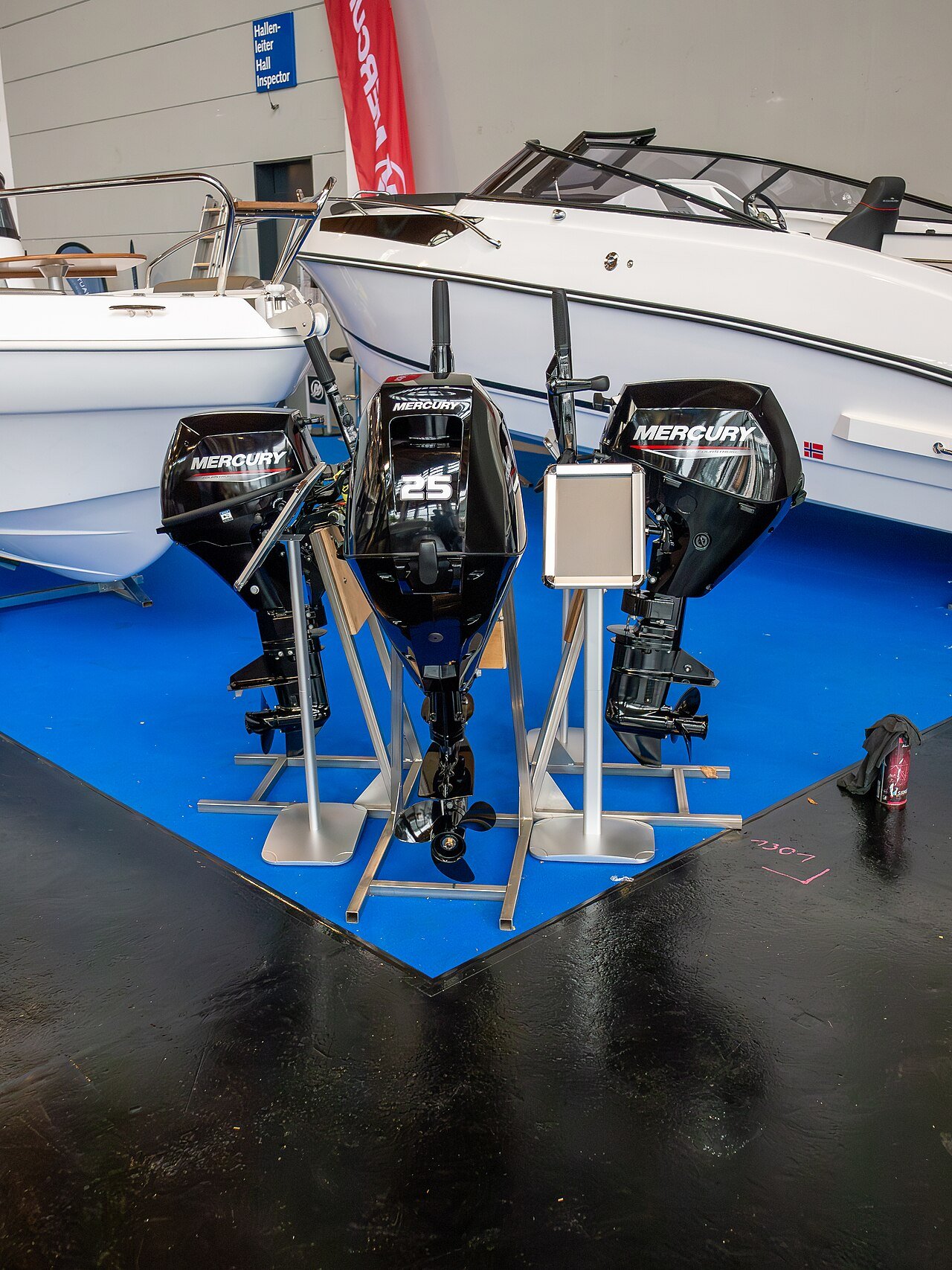
A Mercury 350 hp outboard today is the Verado 350, built on a 5.7-litre V10 that weighs 695 lb, runs on regular 87-octane fuel and comes with digital throttle and shift and power steering as standard. Mercury introduced the V10 in November 2022 as the first ten-cylinder outboard in the industry (Boating Industry: Mercury announces V10 outboard), and in July 2025 it released a performance-enhanced version of the 350. We currently list 13 Verado 350 engines, from $30,210 to $33,710, in every shaft length from 20 to 30 inches, and we deliver them worldwide.
This guide covers what you actually get with the engine, how to read the model codes, which boats it suits, how it compares with the Suzuki and Yamaha 350s and with Mercury’s own 300 and 400, and what to check before you order. If you already know your shaft length and rotation, skip to the price list or browse the Mercury 350 HP category.
Table of Contents
Table of Contents
What a Mercury 350 HP Outboard Is Today
Mercury has sold a 350 Verado for years, but the engine under the cowl has changed. The older Verado 350 was a 2.6-litre supercharged inline six. It weighed 668 lb, needed 89-octane fuel and had a 70-amp alternator, according to BoatTEST’s comparison of the old six with Mercury’s later V8 (BoatTEST: V8 300 Verado vs L6 350 Verado).
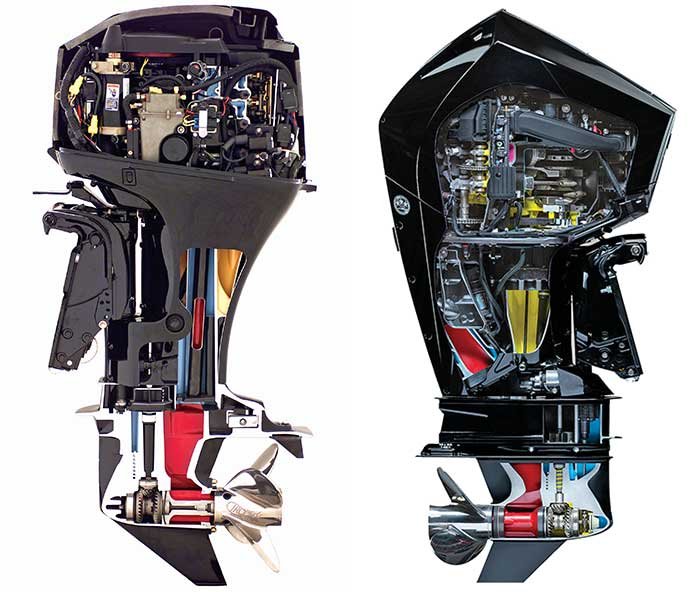
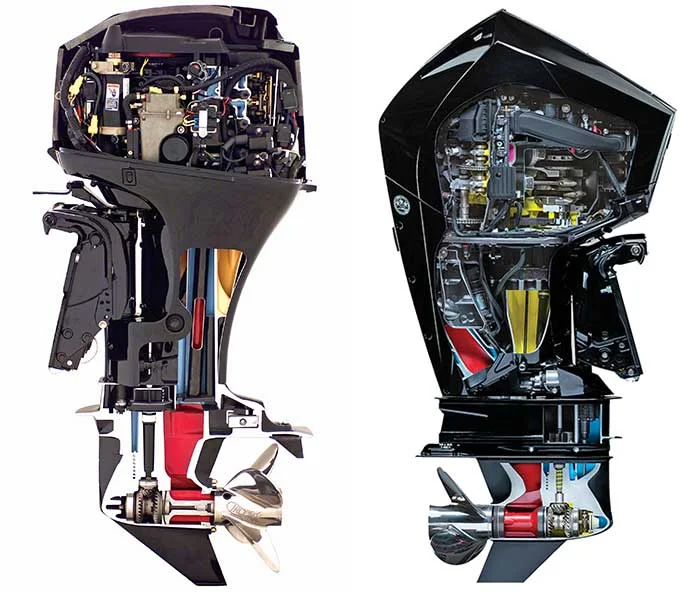
The current Mercury 350 hp outboard drops the supercharger completely. It is a naturally aspirated 5.7-litre (349 cubic inch) V10 with 40 valves and dual overhead cams. BoatTEST reported that it weighs 695 lb, carries a 150-amp alternator, uses a 2.08:1 gearcase and is calibrated for full performance on 87-octane fuel (BoatTEST: Mercury introduces V10 5.7L outboard). FishTalk Magazine pointed out that the V10 is 27 lb heavier than the engine it replaced, and that Mercury designed it specifically to handle heavy loads (FishTalk: Mercury V10 400 and 350 outboards).
Why should a buyer care? Three reasons. Regular fuel is easier to find in remote harbours. More displacement means more torque low down, and that is what pushes a heavy offshore hull onto plane. And a 150-amp alternator keeps a modern electronics package charged without help.
One honest note before you shop. Because Mercury used the Verado 350 name on both generations, some listings anywhere, including a few of ours, still carry catalogue wording that covers both. Before you order, ask us to confirm the model year and serial range of the exact engine. We’ll tell you straight which generation it is.
Mercury 350 HP Outboard Specifications
These are the published figures for the V10 Verado 350, taken from Mercury’s specification brochure as distributed by its dealers (Mercury Verado and FourStroke 250-600hp specification brochure, PDF).
| Specification | Mercury Verado 350 (V10) |
|---|---|
| Engine type | V10, 40-valve, DOHC, naturally aspirated |
| Displacement | 5.7 L (349 cu in) |
| Full-throttle range | 5,800 to 6,400 rpm |
| Alternator | 150 amp (1,890 watt) with Idle Charge |
| Gear ratio | 2.08:1 |
| Dry weight | 695 lb / 316 kg (lightest version) |
| Shaft lengths | 20, 25, 30 and 35 in |
| Steering | Electro-hydraulic power steering; Joystick Piloting optional |
| Controls | Digital Throttle and Shift (DTS), standard |
| Trim | Power trim and tilt |
| Starting | Electric with SmartStart protection |
| Fuel | 87 octane minimum, up to 10% ethanol |
| Mounting | 26-inch centres for multi-engine rigs |
Mercury also offers an optional dual-mode 48-volt and 12-volt alternator that pairs with Navico’s Fathom e-power system, which lets a boat run air conditioning and other house loads from a lithium bank charged by the engine (Boating Industry, cited above). That mostly matters on bigger cruisers and centre consoles with a cabin.


What Changed With the Enhanced 350
On 22 July 2025 Mercury announced a new 425 hp V10 and a “performance enhanced” Verado 350 (Mercury Marine: 425hp V10 and enhanced 350hp launch). Mercury did not publish a list of hardware changes. What it did publish were these results, all from its own testing:
- 15% quicker from 0 to 50 mph than the original V10 350, which Mercury puts down to more mid-range torque.
- 2.7 mph higher top speed than a competing 350 hp outboard with a light load.
- 4 seconds faster from 0 to 30 mph with a heavy load, and 17.8 seconds faster from 0 to top speed, against the same competitor.
- 40% quieter at cruise, with four times the alternator output at cruise, compared with that competitor.
Mercury’s product page says the heavy-load test boat was a 26-foot centre console with a 5,000 lb dry weight on a single engine (Mercury Verado 350-400hp page). These are manufacturer claims, not independent tests, and Mercury doesn’t name the competitor. Read them as a sign of where the engine is strong, which is dragging a loaded boat out of the hole, not as a promise for your hull.
Features That Matter on the Water
Brochures list dozens of features. These are the ones owners actually notice.
Advanced MidSection
The Verado’s Advanced MidSection moves the engine mounts aft and outward, so the powerhead is isolated from the transom. In plain terms, you feel less buzz through the deck at idle and at cruise. That’s a big part of why Verados are popular on boats where people sit close to the engines.
Power steering and joystick
Every Mercury 350 hp outboard comes with electro-hydraulic power steering, so even a triple rig steers with one finger. Joystick Piloting for Outboards is an option. On a 35-foot centre console backing into a tight slip, the joystick is worth more than any amount of horsepower. Mercury says electric steering is available on multi-engine boats now, with a single-engine version to follow.
Adaptive Speed Control
Adaptive Speed Control holds the rpm you set when the load changes. Climb a wave and the engine adds throttle to hold speed; come down the back and it eases off. It makes long offshore runs less tiring at the helm.
Advanced Sound Control
A switch lets you pick between a quiet exhaust note and a louder, throatier one at start-up and idle. Most owners keep it quiet at the dock.
Service door and colour-coded checkpoints
There’s a door in the top cowl so you can check and top up the oil without lifting the cowl off, and the service points are colour-coded. Small details, but they mean the daily check actually gets done.
Range optimisation
A closed-loop fuel system and Mercury’s Advanced Range Optimization lean the mixture at steady cruise to save fuel. Mercury doesn’t publish a single fuel figure for this, because the result depends so much on the boat.
For a wider look at the range, see our Mercury Verado outboard motors guide and our explainer on marine outboard technology.
How to Read Mercury 350 HP Outboard Model Codes
Every Mercury 350 hp outboard listing uses the same shorthand:
- L = 20-inch shaft
- XL = 25-inch shaft
- XXL = 30-inch shaft
- XXXL = 35-inch shaft, mostly for big boats with tall transoms or brackets
- C before the shaft letter (CL, CXL, CXXL) = counter rotation, for the port engine on a twin
- HD = heavy-duty version, where listed
- WH = white cowl. Same engine, different colour.
So a “Verado 350 CXXL WH” is a white engine with a 30-inch shaft and a counter-rotating gearcase. Measure your transom before you pick one. Our guide to long shaft vs short shaft outboard motors shows how, and our counter rotating outboard motor article explains when you need the C version.
Every Mercury 350 HP Outboard We Sell
These are the Mercury 350 hp outboard listings live on our site right now. Prices are in US dollars with delivery included. Every Verado 350 has DTS and power steering, so the table only shows the things that differ. Click a model for photos and the full spec sheet.
| Model | Shaft | Rotation | Colour | Price |
|---|---|---|---|---|
| Verado 350HP L | 20 in | Standard | Black | $30,980 |
| Verado 350HP L WH | 20 in | Standard | White | $32,495 |
| Verado 350HP CL | 20 in | Counter | Black | $31,800 |
| Verado 350HP CL WH | 20 in | Counter | White | $31,655 |
| Verado 350HP XL | 25 in | Standard | Black | $30,210 |
| Verado 350HP XL WH | 25 in | Standard | White | $32,495 |
| Verado 350 CXL | 25 in | Counter | Black | $33,710 |
| Verado 350HP CXL WH | 25 in | Counter | White | $33,045 |
| 350XXL Verado FourStroke | 30 in | Standard | Black | $33,710 |
| 350XXL Verado HD | 30 in | Standard | Black | $33,710 |
| Verado 350HP XXL WH | 30 in | Standard | White | $32,710 |
| Verado 350HP CXXL | 30 in | Counter | Black | $31,720 |
| Verado 350HP CXXL WH | 30 in | Counter | White | $31,575 |


For a twin rig, buy one standard and one counter-rotating engine of the same shaft and colour. A matched black 30-inch pair, for example, is the 350XXL with the 350 CXXL. A white 25-inch pair is the 350 XL WH with the 350 CXL WH. Prices move with stock, so the product page always shows the current figure.


Which Boats Suit a Mercury 350 HP Outboard?
This is not an engine for a light boat. At 695 lb it is built for hulls that need torque more than they need a featherweight transom. Here is where it fits best.
Single-engine centre consoles, 25 to 28 feet. This is exactly the kind of boat Mercury used for its own heavy-load test. A big single centre console with a lot of fuel, a full crew and a T-top is where a single Mercury 350 hp outboard earns its weight. One engine also keeps the cost and the maintenance down.
Twin-engine offshore boats, 30 to 36 feet. Twin 350s are a common setup on serious offshore fishing boats and cruisers in this range. Twin Verados idle smoothly, sync through DTS and work with the joystick.
Triples and quads on 38 feet and up. On the biggest outboard boats you will see three or four 350s or 400s across the transom. Mercury’s 26-inch mounting centres help squeeze them in.
Dual consoles, walkarounds and express cruisers. Boats that carry families and a lot of gear like the low-end grunt and the quiet running. If people chat at the helm at cruise, the Verado’s sound isolation is easy to appreciate.
Work, patrol and rescue boats. Heavy aluminium boats and RIBs used for pilot, patrol and charter work need torque and charging capacity. Our guide to outboard motors for commercial boats goes into duty cycles.
Where a Mercury 350 hp outboard is the wrong choice: boats rated below 350 hp, lighter bay boats and bass boats where weight kills performance, and older hulls whose transoms were built for much lighter engines. For those, look at the Mercury 300 hp outboard or something smaller. Our guide on how to select the correct horsepower for your boat helps you size it.
Twins, Triples and Quads
Most buyers of a Mercury 350 hp outboard end up with more than one. A few things change once you go multi-engine.
Rotation. On twins you need one standard and one counter-rotating engine so the props cancel each other’s torque. On triples the centre engine is usually standard rotation. On quads you normally run two of each.
Matching. Every engine on the transom should have the same shaft length, gear ratio and prop model, and ideally the same model year. Mismatched engines fight each other.
Controls. DTS is standard, which makes multi-engine rigging simpler, because there are no cable runs to bind. Add Joystick Piloting if you dock in tight spaces often.
Electrics. Each engine charges its own battery, but plan the battery switches and the house bank properly. With three or four 150-amp alternators you have plenty of charging power, so cable size and connections become the weak point.
Our twin outboard motor setup guide covers spacing and synchronising in more depth, and outboard motors for yachts looks at bigger multi-engine boats.
One 350 or Twin Smaller Engines?
On boats around 26 to 30 feet, people often ask whether a single Mercury 350 hp outboard beats twin 200s or twin 250s. There’s no single right answer, but the trade-offs are clear.
The case for one engine. A single 350 costs less to buy than two smaller engines, and much less to rig, because you need one set of controls, one steering ram, one prop and one set of gauges. Servicing costs roughly half as much. Fuel use is usually lower too, since you’re pushing one gearcase through the water instead of two. And at 695 lb, one V10 is lighter than a pair of V8 250s at 600 lb each.
The case for two. Redundancy. If one engine quits 40 miles out, the other gets you home. Twins also handle far better at low speed and around the dock, especially with a joystick. Many insurers and many skippers simply prefer two engines for long offshore runs, and some boats are built only for twins.
Our rough rule: if you fish or cruise inshore and within reach of help, one Mercury 350 hp outboard makes a lot of sense. If you regularly run far offshore, two engines are worth the extra cost. Our Mercury 250 hp outboard guide covers the twin-250 option, and the Mercury 250 HP category lists stock such as the Verado 250HP XL.
Charging and Electrics
The 150-amp alternator is one of the strongest reasons to choose a Mercury 350 hp outboard. Modern offshore boats run radar, two or three big multifunction displays, sonar, livewell and washdown pumps, a fridge, lights and sometimes an electric reel or two. A smaller alternator can struggle to keep up, especially at idle while you drift.
Mercury’s Idle Charge feature raises idle speed when battery voltage falls, so the batteries keep charging even when you’re barely moving. That helps on long trolling days.
Plan the electrical system with the engine, not after it:
- Use a dedicated cranking battery for each engine.
- Put the house loads on a separate bank with a proper switch or charge relay.
- Size the battery cables for the cable length, not just the engine. Undersized cable is a common cause of warning alarms and slow cranking on new installs.
- If you’re thinking about lithium batteries or the 48-volt option, talk to your rigger early, because it changes the wiring.
Our guide to outboard motor accessories covers gauges, controls and rigging parts, and marine engine diagnostics explains what SmartCraft data can tell you.
Check Your Boat Before You Order
Ten minutes with a tape measure and the boat’s paperwork saves a very expensive mistake. Check these before you order a Mercury 350 hp outboard.
1. Horsepower rating
Find the boat’s maximum horsepower on the capacity plate near the helm or on the builder’s spec sheet. In the United States, monohulls under 20 feet must carry a capacity plate, and the rating formula is set in federal rules (33 CFR 183.53, horsepower capacity). Bigger boats usually carry a builder or industry plate instead (Discover Boating: all about capacity plates). Other countries have their own rules, but the logic is the same everywhere. Never go over the rating; it can make the boat unsafe and void your insurance.
2. Transom weight
A 695 lb engine is heavy. If your current engines are lighter, the boat will sit lower at the stern. Ask the builder or a naval architect whether the hull can take the extra weight, especially on a twin where the difference doubles.
3. Shaft length
Measure from the top of the transom or bracket to the bottom of the hull at the centreline. Around 20 inches takes an L, 25 an XL, 30 an XXL and 35 an XXXL.
4. Mounting centres
On multi-engine boats, measure centre to centre. The V10 Verado is designed for 26-inch centres, according to Mercury’s July 2025 release, which makes most repowers from other big outboards straightforward.
5. Controls and gauges
Because DTS is standard, you need Mercury DTS controls and SmartCraft-compatible gauges or displays. If your boat has mechanical cable controls today, budget for a new helm.
6. Fuel system
Check the fuel lines, filters, tank vents and anti-siphon valves. A new big engine will expose any restriction quickly.
Mercury 350 HP Outboard vs Suzuki and Yamaha
The two engines most buyers line up against a Mercury 350 hp outboard are the Suzuki DF350A and the Yamaha F350. They take very different approaches.
| Mercury Verado 350 | Suzuki DF350A | Yamaha F350 (V6, 2024 on) | |
|---|---|---|---|
| Layout | 5.7L V10 | 4.4L V6 | 4.3L V6 |
| Weight | 695 lb (316 kg) | 330 kg (X shaft) | 629 lb |
| Gear ratio | 2.08:1 | 2.29:1, two-stage | Check Yamaha’s spec sheet |
| Alternator | 150 amp | 54 amp | 70 amp |
| Propeller | Single prop | Dual contra-rotating props | Single prop |
| Shafts | 20, 25, 30, 35 in | 25 and 30 in transoms | 25, 30, 35 in |
The Suzuki figures come from Suzuki’s own product page (Suzuki DF350A specifications). The Yamaha figures refer to Yamaha’s newer V6 F350, which Soundings reported at 629 lb and 70 amps, about 175 lb lighter than the old 5.3-litre V8 F350 that ran from 2007 to 2019 (Soundings: Yamaha announces new V6 F350). BoatTEST also reported the Mercury V10 as 32 lb lighter than the Suzuki 350 and 257 lb lighter than Yamaha’s 5.6-litre XTO 425.
So what does that mean in practice?
- Mercury gives you the most displacement and by far the most charging current. If you run big electronics, a single Mercury 350 hp outboard makes nearly three times the alternator output of the Suzuki.
- Suzuki uses two contra-rotating props, which give strong grip in reverse and at low speed. It’s a good choice on heavy hulls where bite matters more than top end. We stock the Suzuki DF350ATX and other Suzuki 350 HP models.
- Yamaha’s new V6 F350 is the lightest of the three. If you see a Yamaha F350 listing, check whether it is the older V8 or the newer V6, because they are very different engines. Browse our Yamaha 350 HP category or read our Yamaha 350HP outboard article.

Weight is not the whole story. The best engine for you is the one with a dealer and a parts supply near where you keep the boat. All three brands have wide global networks, but coverage varies a lot by region. Our Suzuki vs Mercury and Yamaha vs Mercury comparisons look at the brands more broadly.
300, 350 or 400?
Mercury 300 vs 350. The Verado 300 is a 4.6-litre V8 at 600 lb with a 115-amp alternator and 1.85:1 or 1.75:1 gearing, according to the same Mercury brochure. The Mercury 350 hp outboard adds 50 hp, 1.1 litres, 35 more amps and a lower 2.08:1 gearcase, at the cost of 95 lb per engine. On a heavy boat rated for 350, that torque is worth it. On a lighter boat, the 300 is often the better package. Our Mercury 300 hp outboard guide and the Mercury 300 HP category cover that engine, for example the Verado 300HP XL.
Mercury 350 vs 400 or 425. The 400 and the newer 425 use the same 5.7-litre V10 block and the same mounting. They cost more, and the extra power only pays off on boats rated for it and run hard. For most owners of 30 to 36-foot twins, a pair of 350s is the sweet spot of price, weight and performance. If you’re weighing the bigger engines, our article on top high-horsepower outboard motors compared and high horsepower outboards are good next reads, along with our Yamaha 425HP outboard guide.
Repowering With a Mercury 350 HP Outboard
A lot of Mercury 350 hp outboard buyers are repowering, often swapping out older supercharged Verados or tired two-strokes. A few points specific to the V10:
- From an old supercharged Verado 350. The V10 is about 27 lb heavier per engine, uses regular fuel and has a much bigger alternator. Your existing DTS helm may need updating to current SmartCraft hardware, so ask before assuming it carries over.
- From another brand. You’ll need Mercury controls, harnesses, gauges and steering. Budget for the whole package, not only the engines.
- From big two-strokes. Four-strokes are heavier. Check the transom rating and how the boat sits at rest with the new weight.
Mercury itself says both V10 models are positioned for repowering thanks to the 26-inch centre mounting. Our guides to boat engine replacement and outboard motor upgrades walk through costs, and boat motor installation service explains what a proper rigging job includes.
Propping and Gearing
The prop decides whether your Mercury 350 hp outboard reaches its 5,800 to 6,400 rpm range at full throttle with a normal load. If it can’t get there, the pitch is too high and the engine labours. If it runs past 6,400, the pitch is too low.
The 2.08:1 gearcase turns the prop slower than the 1.75:1 or 1.85:1 cases on the V8. That lets you swing a bigger-diameter prop, which suits heavy offshore hulls. Mercury’s Precision Gearcase was designed around the Revolution X prop, which BoatTEST noted was developed to match the V10. Four-blade props are common on these engines for grip in rough water and lift at the stern.
Start with the prop the boat builder recommends for your exact hull and engine count, then fine-tune by an inch of pitch either way. Our guides to outboard motor gear ratio and outboard motor propellers explain the maths, and marine propeller suppliers covers where to buy.
Fuel Use and Range
Nobody can tell you exactly how much fuel a Mercury 350 hp outboard will burn on your boat without testing it on your boat. Hull, weight, prop, trim and sea state matter more than the engine.
What we can say: at wide-open throttle, any 350 hp four-stroke uses a lot of fuel. At a steady cruise, usually somewhere in the mid-range rpm, consumption per mile drops sharply, and that’s where Advanced Range Optimization helps. The best data for your type of boat is the builder’s performance bulletin, which lists speed, rpm, fuel flow and range at each step. Keep the hull clean, trim properly and don’t carry weight you don’t need. Our guide to fuel-efficient outboard motors has more practical tips, and marine engine performance explains what drives speed and economy.
What a Mercury 350 HP Outboard Costs
Our Mercury 350 hp outboard prices currently run from $30,210 to $33,710, delivered. The price moves with shaft length, rotation and colour; white cowls generally cost a little more, and the longest shafts sit at the top of the range.
Remember the parts of the job that aren’t in the engine price: propellers, DTS controls, SmartCraft gauges or displays, steering hardware, rigging kits and harnesses, batteries and installation labour. On a twin or triple, those extras add up quickly. Our article on hidden costs when buying an outboard motor lists them, and outboard motor financing explains how buyers spread the cost.
Warranty: Mercury’s Verado brochure says Verado outboards come with a three-year limited warranty and a three-year corrosion warranty (Mercury Verado brochure, PDF). Terms depend on your country and how the engine is registered, so check the paperwork. Our page on outboard motors under warranty explains what’s usually covered.
Buying and Worldwide Delivery
Ordering a Mercury 350 hp outboard from us works like this:
- Pick your engine from the Mercury 350 HP category, checking shaft, rotation and colour.
- If you’re unsure about fit or generation, contact us first with your boat’s make, length, transom height and current engines.
- We crate the engine and ship it. Under our shipping policy, orders usually ship within 1 to 6 business days and delivery is free.
- You get a shipment confirmation email with tracking, which you can follow on our order tracking page.
Import duty and taxes depend on your country, so check with your customs office or a freight agent before the crate lands. Our guides on outboard motors worldwide shipping and the cost of shipping an outboard motor internationally explain each step. To check you’re getting the real thing, read how to verify genuine Mercury marine engines, and see our returns policy before you buy.
Break-In, Servicing and Saltwater Care
Follow the break-in schedule in your owner’s manual exactly. In general that means varying the throttle and not holding one speed, or full throttle, for long in the first hours. Our outboard motor break-in period guide explains why it matters.
After that, stick to the service intervals in the manual: engine oil and filter, gearcase lube, spark plugs, fuel filters, anodes and the water pump. Use the FC-W four-stroke oil grade the manual specifies. Our guides to marine engine oil, outboard motor lower unit oil and outboard motor servicing cover each job.
Most Mercury 350 hp outboard owners boat in salt water. Flush with fresh water after every trip, rinse the outside, tilt the engines up when moored if you can, and check the anodes regularly. Our saltwater outboard motors guide and outboard motor maintenance checklist have full routines.
Mistakes to Avoid
- Buying a 350 because it’s the biggest you can afford. If the boat is light or rated lower, a 300 will often run better.
- Ignoring transom weight. Two 695 lb engines put almost 1,400 lb on the stern before fuel and batteries.
- Getting the shaft length wrong. Measure, don’t guess. Brackets and jack plates change the number.
- Two standard-rotation engines on a twin. Always pair a standard with a counter-rotating engine.
- Forgetting the helm. DTS engines need DTS controls. Old mechanical binnacles won’t work.
- Not confirming the generation. Ask for the model year and serial range before you pay, so you know whether you’re getting the V10.
Frequently Asked Questions
How much does a Mercury 350 hp outboard weigh?
The V10 Verado 350 weighs 695 lb (316 kg) dry in its lightest version. Longer shafts add a little. The older supercharged inline-six Verado 350 weighed 668 lb.
Is the Mercury 350 a V8 or V10?
The current Mercury 350 hp outboard is a 5.7-litre V10. Mercury’s 250 and 300 Verados use a 4.6-litre V8, and the 350 sold before the V10 arrived was a 2.6-litre supercharged inline six.
What fuel does the Mercury 350 hp outboard use?
Regular 87-octane unleaded, with up to 10% ethanol. The older supercharged 350 needed 89 octane.
What is the alternator output of the Mercury 350 Verado?
150 amps (1,890 watts) with Idle Charge, which raises idle speed when battery voltage drops. An optional dual 48-volt and 12-volt alternator is available for boats running Navico’s Fathom e-power system.
What size boat needs a Mercury 350 hp outboard?
Singles are common on heavy centre consoles of about 25 to 28 feet, and twins on boats from about 30 to 36 feet. Bigger boats run triples or quads. Always stay within the horsepower and weight ratings for your hull.
What is the difference between the Mercury 350 and 400 Verado?
Both use the same 5.7-litre V10 block and mounting. The 400 is tuned for more power and costs more. For most twin-engine boats in the 30 to 36-foot range, the 350 gives the best balance of price and performance.
Is the Mercury 350 hp outboard quieter than other 350s?
Mercury claims the enhanced Verado 350 is 40% quieter at cruise than a competing 350 hp outboard. That’s Mercury’s own test. The Advanced MidSection, which isolates the engine from the transom, is the main reason Verados are known for quiet running.
Do you ship a Mercury 350 hp outboard worldwide?
Yes. Delivery is free and orders usually ship within 1 to 6 business days. Import duties and taxes in your country are your responsibility, so check them before you order.
Does the Mercury 350 hp outboard come with power steering?
Yes. Electro-hydraulic power steering and Digital Throttle and Shift are standard on every Verado 350. Joystick Piloting is an option.
Can I put a Mercury 350 hp outboard on a boat built for the old supercharged 350?
Usually, yes. The V10 is only about 27 lb heavier per engine than the supercharged inline six it replaced. Check the transom rating, the mounting centres and whether your DTS helm and gauges need updating to current SmartCraft hardware before you order.
What shaft length do I need for a Mercury 350 hp outboard?
Measure from the top of the transom, bracket or jack plate to the bottom of the hull at the centreline. Around 20 inches takes an L, 25 an XL, 30 an XXL and 35 an XXXL. Most offshore centre consoles with brackets take the 25 or 30-inch versions. If you’re unsure, send us the measurement and the boat model and we’ll check it.
How long does a Mercury 350 hp outboard last?
Mercury doesn’t publish a lifespan in hours, and nobody honestly can for your boat. How long any big four-stroke lasts depends on correct propping, a proper break-in, regular servicing and good saltwater care. Engines that are flushed, serviced on schedule and propped to reach their rev range tend to give the fewest problems.
Order Your Mercury 350 HP Outboard
If your boat is heavy, rated for 350 and spends its time offshore, a Mercury 350 hp outboard gives you big-displacement torque, regular-fuel convenience, a 150-amp alternator and the quiet ride the Verado name is known for. Browse every Mercury 350 HP outboard in stock, see the full range of Mercury outboards, or send us your boat’s details and we’ll tell you which shaft and rotation to order. Our buy Mercury outboards guide covers the rest of the line-up.
Sources and References
- Mercury Marine: V10 425hp launch and enhanced 350hp (July 2025)
- Mercury Marine: Verado 350-400hp product page
- Mercury Verado and FourStroke 250-600hp specification brochure (PDF)
- Mercury Verado brochure (PDF)
- Boating Industry: Mercury announces V10 outboard
- BoatTEST: Mercury introduces V10 5.7L outboard
- BoatTEST: V8 300 Verado vs L6 350 Verado
- FishTalk Magazine: Mercury V10 400 and 350 outboards
- Suzuki Marine: DF350A specifications
- Soundings: Yamaha announces new V6 F350
- Cornell LII: 33 CFR 183.53, horsepower capacity
- Discover Boating: all about capacity plates
Posts Widget
- 1

- 2

- 3

- 4


S.H Continental Marine
USA HERALD MAGAZINE INC
Our team is dedicated to providing exceptional customer service.
Email: info@shcontinentalmarine.com
Choose S.H Continental Marine
for your outboard engine needs and enjoy superior quality, exceptional customer service, and unbeatable prices.
