
Mercury 300 HP Outboard: Best V8 Models & Prices (2026)
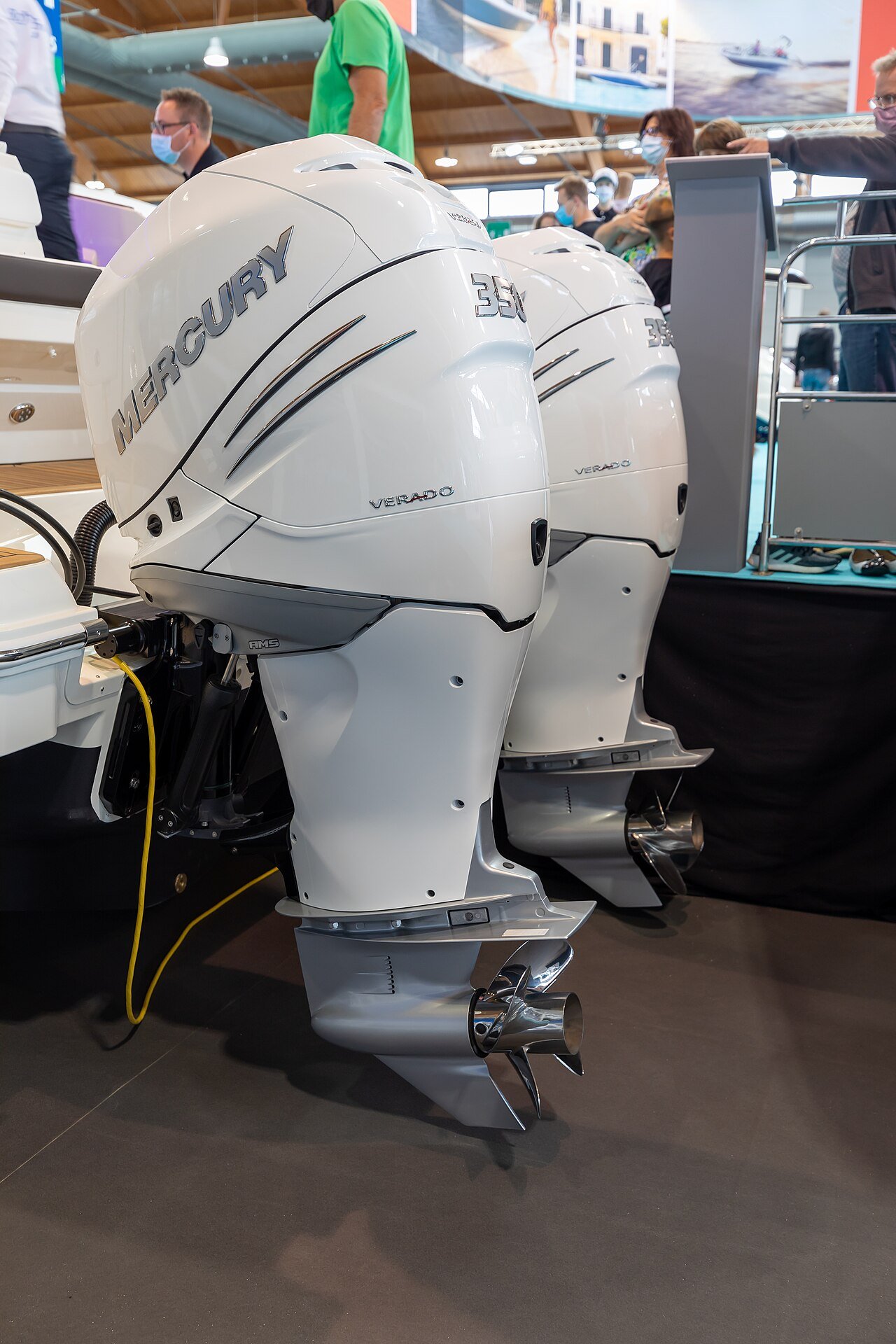
A Mercury 300 hp outboard is a 4.6-litre V8 sold in three main versions: the FourStroke for general use, the Pro XS for fast fishing boats, and the Verado for offshore boats and multi-engine rigs. All three run on 87-octane fuel, turn 5,200 to 6,000 rpm at full throttle and share the same block, which Mercury launched in 2018 (Mercury Marine V8 launch release). Where they differ is weight, steering, charging output and price. We have 25 listings in stock, from $24,845 for a FourStroke to $32,330 for a white Verado, and we deliver them worldwide.
This guide covers what separates the versions, how to read the model codes, which boats each one suits, how it stacks up against the Yamaha and Suzuki 300s, and what to check on your transom before you order. If you already know what you want, jump to the full price list or open the Mercury 300 HP category.
Table of Contents
Table of Contents
What a Mercury 300 HP Outboard Is Today
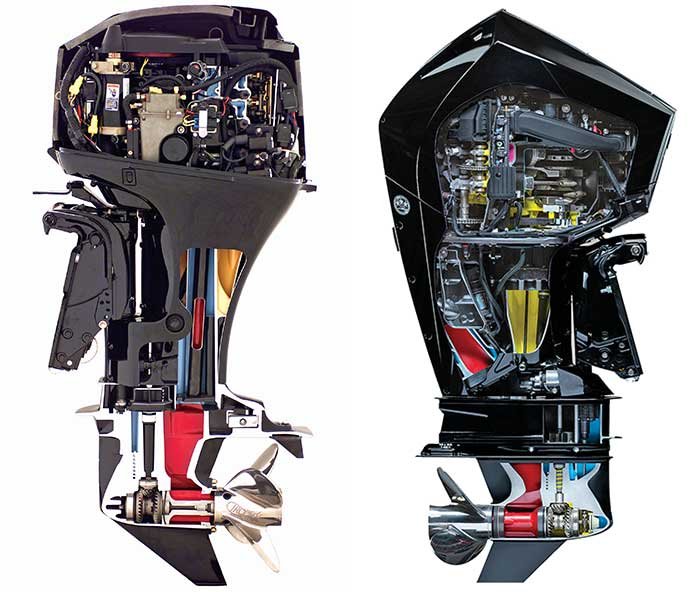
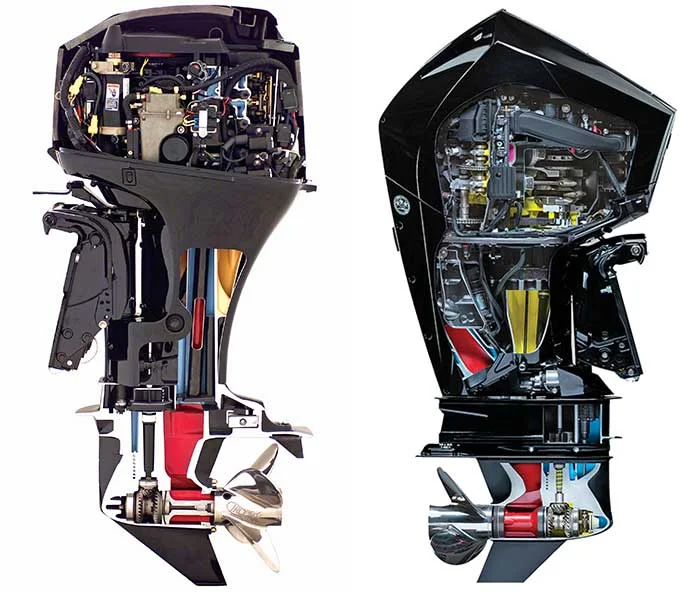
If you shopped for a big Mercury before 2018, a 300 meant a supercharged inline six. That engine is gone. Every new Mercury 300 hp outboard now uses a naturally aspirated 4.6-litre V8 with four camshafts and 32 valves. Mercury replaced the old supercharged Verado with this block, and BoatTEST measured the V8 Verado at 600 lb, which is 35 lb lighter than the six-cylinder 300 it replaced (BoatTEST Verado 4.6L V8 review).
Displacement matters at this size. A bigger engine makes its torque lower in the rev range, so it pulls a loaded hull onto plane without having to scream. Mercury says the 4.6 litres is the largest displacement in the 250 to 300 hp class, and the company claimed the FourStroke 300 makes up to 9% more torque than its nearest rival between 3,500 and 4,500 rpm (Boating Industry coverage of the V8 launch). That is a manufacturer figure, so treat it as a claim rather than an independent test, but the basic point holds: more litres, more grunt in the mid-range.
The other thing that changed is fuel. The old supercharged 350 Verado wanted 89 octane. The V8 runs on regular 87, and BoatTEST also noted the V8 Verado carries a 115-amp alternator against 70 amps on the old supercharged engine (BoatTEST: V8 300 Verado vs L6 350 Verado). For anyone running a boat far from a big marina, regular fuel and a strong alternator are worth more than any brochure line.
So when you buy a Mercury 300 hp outboard from us, you are buying one of the V8 platform engines. The choice is not “which engine” so much as “which package around the engine”. That is what the rest of this guide sorts out.
Mercury 300 HP Outboard Specs at a Glance
Here are the published Mercury 300 hp outboard numbers side by side. Weights are dry and for the lightest version of each, which is usually the 20-inch shaft. Add a little for longer shafts and counter-rotation gearcases.
| Spec | FourStroke 300 | Pro XS 300 | Verado 300 |
|---|---|---|---|
| Engine | 4.6L V8, DOHC, 32-valve | 4.6L V8, DOHC, 32-valve | 4.6L V8, DOHC, 32-valve |
| Midsection | Conventional (CMS) | Conventional (CMS) | Advanced (AMS) |
| Dry weight (lightest) | 527 lb / 239 kg | 505 lb / 229 kg at launch | 600 lb / 272 kg |
| Full-throttle range | 5,200 to 6,000 rpm | 5,200 to 6,000 rpm | 5,200 to 6,000 rpm |
| Alternator | 85 amp with Idle Charge | 85 amp with Idle Charge | 115 amp with Idle Charge |
| Gear ratio | 1.75:1 | 1.75:1 (TorqueMaster) | 1.85:1 or 1.75:1 |
| Shaft lengths | 20, 25, 30 in | 20, 25 in | 20, 25, 30 in |
| Steering | Hydraulic or power | Hydraulic or power | Electro-hydraulic power, standard |
| Controls | Mechanical or DTS | Mechanical or DTS | DTS, standard |
| Fuel | 87 octane | 87 octane | 87 octane |
The weights come from Mercury’s 2018 figures reported by Trade Only Today, which listed 527 lb for the FourStroke, 505 lb for the Pro XS and 600 lb for the Verado (Trade Only Today on the new V8s). Some later Pro XS literature quotes 511 lb for the lightest model, so expect a few pounds of drift between model years. Alternator and gear ratio data match the distributor spec tables for the Verado range and the FourStroke range.
One more number that matters for repowers: Mercury says both V8 FourStroke models mount on 26-inch centres, and it calls the FourStroke 300 the lightest engine in the 300 hp class by more than 20 lb (Mercury FourStroke 250-300hp page). If you are swapping out a pair of older engines on 26-inch centres, the bolt pattern question is usually settled before you start.
FourStroke vs Pro XS vs Verado
Same block, three personalities. Here is how we explain it to customers on the phone.
FourStroke 300: the sensible default
The FourStroke is the Mercury 300 hp outboard most people should look at first. It is light, it takes mechanical cable controls if your boat already has them, and it costs the least. Mercury rates it 33% quieter at cruise than the leading four-stroke competitor, with 30% less vibration transmitted at idle (Mercury’s own comparison, again a maker’s claim). It comes in black or white, in 20, 25 and 30-inch shafts, and in standard or counter rotation.
Who a FourStroke Mercury 300 hp outboard suits: center consoles from about 22 to 26 feet on a single engine, bay boats, big pontoons and tritoons, and twin rigs where the owner wants to keep cost and weight down. If you are not sure which version you need, the FourStroke is rarely the wrong answer.

Browse it: Mercury 300HP XL FourStroke ($25,100) or the 300HP L FourStroke ($24,845), our lowest-priced new 300.
Pro XS 300: built to get there first
The Pro XS uses the same V8 with a performance calibration, a higher-revving tune, Transient Spark timing for a harder hole shot and a lighter, more compact cowl. The 300 Pro XS was the first time Mercury put that badge on a 300 hp engine. Boating Magazine noted the 200 to 300 Pro XS models weigh 505 lb and can be had with the TorqueMaster gearcase, which has a 1.25-inch prop shaft and low water pickups on the nose cone so the engine can be mounted high (Boating Magazine on the V8 lineup).
Who it suits: bass boats, big bay boats, performance catamarans and anyone who runs a jack plate. Pro XS stock moves fast and our current inventory is in the 250 and 200 sizes, such as the Mercury 250XL Pro XS and the 250L Pro XS TorqueMaster. If you specifically want a 300 Pro XS, contact us and we will tell you honestly when we can get one.
Verado 300: the quiet, premium one
The Verado wraps the V8 in Mercury’s Advanced MidSection, which moves the engine mounts aft and outward so the powerhead is isolated from the transom. You feel it at idle, and you hear it at cruise, or rather you don’t. Every Verado 300 comes with electro-hydraulic power steering, digital throttle and shift and the bigger 115-amp alternator. Mercury also gave it Advanced Sound Control, which lets you switch between a quiet mode and a louder sport note.
The trade-off is weight. At 600 lb the Verado carries 73 lb more than the FourStroke. On a twin rig, that is nearly 150 lb on the transom. Most offshore hulls designed for Verados are built around that number, so it is only a problem if you are swapping onto a boat rated for lighter engines.

Mercury’s Verado brochure says each Verado carries a three-year limited warranty plus a three-year corrosion warranty (Mercury Verado brochure, PDF). Warranty terms vary by country and by how the engine is registered, so check the paperwork for your region. Our page on outboard motors under warranty explains what is usually covered.
Who a Verado Mercury 300 hp outboard suits: offshore center consoles of 25 feet and up, twins and triples, dual consoles and cruisers where people want to talk at speed. For more on the wider range, see our Mercury Verado outboard motors guide.
SeaPro 300: for work boats
Mercury also builds the V8 as a SeaPro for commercial users. Trade Only reported that SeaPro gearcases were validated at three times the life of a recreational gearcase, and that the 300 SeaPro AMS gets the 115-amp alternator (Trade Only Today: Power by the Pound). SeaPro engines are tuned for duty cycle, not top speed. We currently list a pre-owned pair of 300XXL SeaPro engines at $17,500. Ask for the hour readings and service history before you commit, as you should with any used engine.

If you run a fleet, our guide to outboard motors for commercial boats goes deeper on duty cycles and spares.
How to Read Mercury 300 HP Outboard Model Codes
Mercury model names look like alphabet soup until you know the pattern. Once you do, you can read any listing in two seconds.
- L means a 20-inch shaft.
- XL means a 25-inch shaft.
- XXL means a 30-inch shaft.
- C in front (CL, CXL, CXXL) means counter rotation. The prop turns the opposite way, which you want on the second engine of a twin rig.
- DTS means Digital Throttle and Shift. No cables, just wires.
- WH means a white cowl. Same engine, different colour.
So a “Verado 300 CXXL WH” is a white Verado with a 30-inch shaft and a counter-rotating gearcase, the classic port-side engine on a big offshore twin. A “300 L FourStroke DTS” is a black FourStroke with a 20-inch shaft and digital controls. If you are unsure about shaft length, our guide to long shaft vs short shaft outboard motors walks through measuring the transom, and our explainer on the counter rotating outboard motor covers when you need one.
Every Mercury 300 HP Outboard We Sell
These are the Mercury 300 hp outboard listings live on our site right now. Prices are in US dollars and include delivery. Click any model for its full spec sheet and photos.
FourStroke 300 models
| Model | Shaft | Rotation | Controls | Colour | Price |
|---|---|---|---|---|---|
| 300HP L FourStroke | 20 in | Standard | Mechanical | Black | $24,845 |
| 300HP L FourStroke DTS | 20 in | Standard | DTS | Black | $25,700 |
| 300HP L FourStroke WH | 20 in | Standard | Mechanical | White | $26,325 |
| 300HP L FourStroke DTS WH | 20 in | Standard | DTS | White | $27,175 |
| 300HP XL FourStroke | 25 in | Standard | Mechanical | Black | $25,100 |
| 300HP XL FourStroke DTS | 25 in | Standard | DTS | Black | $25,945 |
| 300HP XL FourStroke WH | 25 in | Standard | Mechanical | White | $26,580 |
| 300HP XL FourStroke DTS WH | 25 in | Standard | DTS | White | $27,240 |
| 300HP CXL FourStroke | 25 in | Counter | Mechanical | Black | $25,555 |
| 300HP CXL FourStroke DTS | 25 in | Counter | DTS | Black | $26,400 |
| 300HP CXL FourStroke WH | 25 in | Counter | Mechanical | White | $27,030 |
| 300HP CXL FourStroke DTS WH | 25 in | Counter | DTS | White | $27,240 |


Verado 300 models
Every Verado comes with DTS and power steering, so the table only shows shaft, rotation and colour.
| Model | Shaft | Rotation | Colour | Price |
|---|---|---|---|---|
| Verado 300HP L | 20 in | Standard | Black | $29,940 |
| Verado 300HP L WH | 20 in | Standard | White | $31,570 |
| Verado 300HP CL | 20 in | Counter | Black | $30,440 |
| Verado 300HP CL WH | 20 in | Counter | White | $32,070 |
| Verado 300HP XL | 25 in | Standard | Black | $30,220 |
| Verado 300HP XL WH | 25 in | Standard | White | $30,260 |
| Verado 300HP CXL | 25 in | Counter | Black | $30,720 |
| Verado 300HP CXL WH | 25 in | Counter | White | $30,745 |
| Verado 300HP XXL | 30 in | Standard | Black | $30,500 |
| Verado 300HP XXL WH | 30 in | Standard | White | $32,130 |
| Verado 300HP CXXL | 30 in | Counter | Black | $31,005 |
| Verado 300HP CXXL WH | 30 in | Counter | White | $32,330 |


Prices change as stock moves, so the product page always has the current figure. For a twin rig, pair one standard-rotation engine with its counter-rotation twin of the same shaft and colour, for example the Verado 300 XXL with the Verado 300 CXXL.
Which Boats Suit a Mercury 300 HP Outboard?
The short answer: any hull whose capacity plate or builder rating allows a Mercury 300 hp outboard on a single engine, or 600 hp and up for twins. In practice that covers a few clear groups.
Single-engine center consoles, 22 to 26 feet. This is the bread-and-butter use. A single FourStroke Mercury 300 hp outboard on a 23 or 24-foot center console gives a strong hole shot with a full load of fuel and people. A single Verado makes sense if you fish far offshore and want the quieter ride for long runs home.
Bay boats and flats boats, 22 to 25 feet. Many are rated right at 300. Here weight and mounting height matter, which points to the FourStroke or the Pro XS on a jack plate.
Twin-engine offshore boats, 28 to 35 feet. A pair of 300s is a very common setup on boats in this range. Verado twins are popular because of the smooth idle and the joystick option, while FourStroke twins save weight and money. Our guide to outboard motors for yachts covers bigger multi-engine rigs.
Large pontoons and tritoons. A heavy tritoon with a performance package can carry a Mercury 300 hp outboard and use every bit of it pulling skiers. The 25-inch FourStroke is usually the match. Read our outboard motors for pontoons guide first, because many pontoons top out lower.
Work and patrol boats. Rescue RIBs, pilot boats and dive boats often run twin 300s. For hard daily use, the SeaPro is worth a look.
Where a 300 is the wrong choice: small boats with a lower rating (never exceed it), light hulls under about 20 feet, and displacement hulls that will never plane. For those, a smaller engine does the job for less money. Our article on how to select the correct horsepower for your boat helps you size it.
One Engine or Two?
On boats around 26 to 28 feet, buyers often ask whether one Mercury 300 hp outboard or twin 150s or 200s is the better plan. Here is the honest version.
A single Mercury 300 hp outboard costs less to buy, less to service and less to rig. One set of plugs, one oil change, one gearcase, one set of controls. It also burns less fuel than two smaller engines making the same total power, because you are pushing one lower unit through the water instead of two.
Twins give you redundancy. If one engine stops 30 miles out, you get home on the other. They also give much better slow-speed handling around docks, especially with a joystick system. For offshore work far from help, a lot of skippers will not go any other way.
If you go twin, use a standard and a counter-rotating engine so the props cancel each other’s torque, and match shaft length, gear ratio and props. Our twin outboard motor setup guide explains spacing, rigging and synchronising.
Check Your Boat Before You Buy
Do these checks before you order a Mercury 300 hp outboard. They take ten minutes and save a lot of grief.
1. Horsepower rating
Find the capacity plate near the helm or the builder’s spec sheet. On boats sold in the United States, monohulls under 20 feet must carry a US Coast Guard capacity plate showing maximum horsepower, persons and weight, and the formula behind that rating is set out in federal rules (33 CFR 183.53, horsepower capacity). Larger boats usually carry a builder or industry plate instead (Discover Boating: all about capacity plates). Other countries have their own rules, but the principle is the same everywhere: do not go over the rating. It can void insurance and it can make the boat dangerous.
2. Transom weight
Swapping a 450 lb engine for a 600 lb Verado changes how the boat sits. A stern-heavy boat takes on water through scuppers, porpoises and struggles to plane. If your current engine is much lighter, the FourStroke at 527 lb is the safer swap.
3. Transom height and shaft length
Measure from the top of the transom to the bottom of the hull at the centreline. Around 20 inches takes an L, around 25 an XL, around 30 an XXL. Jack plates and brackets change this, so measure the mounting surface, not just the hull.
4. Mounting pattern and spacing
For twins, check the centre-to-centre distance. Mercury’s V8 FourStrokes mount on 26-inch centres. If your boat had older engines on a different spacing, ask your rigger whether it needs changing.
5. Fuel system and controls
Is your fuel line, filter and tank vent in good shape? A new V8 will expose any weak link. Decide early whether you keep mechanical controls or move to DTS, because that decides which model you order.
Controls and Steering
On the FourStroke and Pro XS you choose between mechanical (cable) controls and DTS. Mechanical controls are cheaper and easy to fix anywhere in the world. If your boat already has a working Mercury mechanical binnacle and cables in good condition, the non-DTS engine saves money.
DTS replaces the cables with wires. Shifts are smoother, throttle response is crisp, and you can add features like dual-engine sync, a second helm or joystick piloting. On twin rigs and on boats with long cable runs, DTS is worth paying for. Verado comes with it as standard.
Steering on a Mercury 300 hp outboard should be hydraulic at minimum. The FourStroke and Pro XS take a hydraulic system or Mercury’s power steering. The Verado has electro-hydraulic power steering built in, which feels very light at the wheel. If you are upgrading from cable steering, read our hydraulic steering for outboard motors guide.
Charging and Electrics
Modern fishing boats carry a lot of electrical load: chartplotters, radar, sonar, livewell pumps, shallow-water anchors and lights. That is where alternator size counts.
The FourStroke and Pro XS versions of the Mercury 300 hp outboard put out 85 amps peak, and Mercury’s Idle Charge raises idle speed when battery voltage drops so the batteries keep charging while you drift. The Verado 300 gives you 115 amps. If you run heavy electronics on a single engine, the Verado’s extra 30 amps can be the difference between flat batteries and full ones at the end of the day.
Plan the battery bank with the engine. A dedicated cranking battery, a house bank on a switch or isolator, and correctly sized cables are not optional at this level. Undersized cable is one of the most common reasons a new big outboard throws alarms on the first trip.
Propping a Mercury 300 HP Outboard
The engine is only half the package. The prop decides whether your Mercury 300 hp outboard reaches its rev range, holds a plane at low speed and gets on plane cleanly with a load.
The rule is simple: with a normal load, the engine should reach the top half of its 5,200 to 6,000 rpm range at wide-open throttle. If it can’t, the pitch is too high and the engine labours. If it runs past 6,000, the pitch is too low and you hit the limiter.
Gear ratio is part of this. The FourStroke and Pro XS use 1.75:1. The Verado comes in 1.85:1 or 1.75:1. The 1.85 gearcase spins the prop slower for the same rpm, which suits heavy offshore hulls and bigger-diameter props. The 1.75 suits lighter, faster boats. Our guide to outboard motor gear ratio explains the maths.
Four-blade stainless props are common on a Mercury 300 hp outboard because they hold well in rough water and help with lift at the stern. Three-blade props often give a little more top speed. Fuel savings from prop choice can be real: Boating Magazine tested a Mercury Enertia ECO prop on a Key West 2300 with a Verado 300 and recorded 28.6% better average fuel economy between 25 and 45 mph than two other popular Mercury props (Boating Magazine Enertia ECO test). That test was on the older supercharged Verado, so take it as a sign of how much the prop matters rather than a number for your boat. Browse our outboard motor propellers guide before you settle on one.
Fuel Use: What to Expect
Anyone who tells you exactly how much fuel a Mercury 300 hp outboard will burn on your boat is guessing. Hull shape, weight, prop, trim, sea state and load all change the result more than the engine itself does.
A few things are clear. At wide-open throttle, any 300 hp four-stroke drinks a lot. At a sensible cruise, usually somewhere around 3,500 to 4,500 rpm, a well-propped boat uses far less fuel per mile. Mercury’s V8s include Advanced Range Optimization, which leans the mixture at steady cruise speeds to save fuel. At launch, Mercury claimed the 300 Verado was up to 20% quicker and two mph faster than its closest competitor while using up to 8% less fuel, per Boating Magazine’s report on the launch. Again, a maker’s figure.
For a real number on your type of boat, look for the builder’s performance bulletin. Most builders publish one with speed, rpm, gallons per hour and miles per gallon at each step. That is far better than any general chart. To get the best economy, trim the engine up until the bow lifts and speed stops rising, keep the hull clean, and don’t carry fuel and water you don’t need. Our guide to fuel-efficient outboard motors lists more ways to cut consumption.
Mercury 300 HP Outboard vs Yamaha and Suzuki
The two engines most buyers compare against a Mercury 300 hp outboard are the Yamaha F300 and the Suzuki DF300. Both are good engines. The differences come down to layout, weight and how each one delivers its power.
| Mercury FourStroke 300 | Mercury Verado 300 | Yamaha F300 | Suzuki DF300AP | |
|---|---|---|---|---|
| Layout | 4.6L V8 | 4.6L V8 | 4.2L V6 | 4.0L V6 |
| Weight story | Lightest 300 per Mercury | Heavier, smoother | Roughly 50 lb more than Merc FourStroke | Roughly 50 lb more than Merc FourStroke |
| Strong point | Low-end torque for the weight | Refinement, power steering, 115 A | Proven offshore record | Lean Burn economy, Selective Rotation |
The weight gap comes from FishTalk Magazine, which reported the V8 FourStroke at 527 lb in its 20-inch version, almost 50 lb less than Yamaha’s V6 F300 and Suzuki’s DF300 (FishTalk on the Mercury V8s). Exact weights vary by shaft and model year, so compare the specific versions you are looking at.
What the table doesn’t show: dealer and parts support where you boat. A brilliant engine with no service network nearby is a poor choice. Mercury, Yamaha and Suzuki all have wide global networks, but coverage varies by region, so check before you choose. If you are weighing brands, we also stock the Suzuki DF300APX and other Suzuki 300 HP models, and you can read our Suzuki DF300B and Yamaha 300HP outboard review for the other side of the story. Our Yamaha vs Mercury and Suzuki vs Mercury comparisons cover the brands more broadly.
250, 300 or 350?
Because the Mercury 250 and the Mercury 300 hp outboard share the same V8 block and the same weight, the 300 costs only a little more and adds 50 hp with no extra load on the transom. If your boat is rated for 300, the extra power usually pays off in a better hole shot with a full load and a lower cruise rpm, which means a quieter engine and often similar fuel use. Our Mercury 250 HP outboard guide covers the smaller sibling, and the Mercury 250 HP category lists stock.
The 350 is a different engine. The Verado 350 uses a 5.7-litre V10 that weighs about 695 lb and has a 150-amp alternator, according to distributor spec tables. That is nearly 100 lb more than a Verado 300 per engine. On boats designed for it, the 350 is superb. On a boat built around V8 weights, it is often too much. Browse the Mercury 350 HP category if your hull calls for it, for example the Verado 350HP XL.
Going the other way, a Mercury 200hp outboard on the same V8 block makes sense for lighter boats rated at 200 to 225.
What a Mercury 300 HP Outboard Costs
For context, when the V8s launched in 2018, Trade Only reported US list prices of $23,570 for the 300 FourStroke, $24,965 for the 300 Pro XS and $25,450 for the 300 Verado (Trade Only, July 2018 edition). Prices have risen since then across the whole industry.
Our current Mercury 300 hp outboard prices run from $24,845 to $27,240 for a new FourStroke and from $29,940 to $32,330 for a new Verado, with delivery included. Here is what moves the price within each family:
- Shaft length. Longer shafts cost a bit more.
- Counter rotation. Usually a few hundred dollars more than standard.
- DTS. Adds roughly $200 to $850 over the mechanical version on our FourStroke listings.
- White cowl. Adds roughly $1,300 to $1,600 on most listings.
Remember the extras that are not part of the engine price: propeller, gauges or displays, control box, steering, cables or harnesses, batteries and installation labour. Budget for them up front. Our article on hidden costs when buying an outboard motor lists them in detail, and outboard motor financing explains how buyers spread the cost.
New or Used?
A used Mercury 300 hp outboard can be good value, but big V8s that have worked hard offshore can also hide expensive problems. If you buy used, ask for:
- The hour reading and an engine data report from Mercury’s diagnostic software, which shows time spent at each rpm band and any overheat or over-rev events.
- Service records showing oil, gearcase lube and water pump work.
- A compression test across all eight cylinders. Readings should be close to each other.
- A look at the gearcase oil. Milky oil means water intrusion; metal flakes mean wear.
Our guides to the outboard motor compression test and used Mercury outboard motors go into this in depth. For most private buyers, a new engine with a full factory warranty is the less stressful route, which is why most of our 300 stock is new.
Ordering and Worldwide Delivery
Buying a Mercury 300 hp outboard from us is straightforward:
- Pick the model from the Mercury 300 HP category, checking shaft, rotation, controls and colour.
- Place the order or ask us a question first if you are unsure about fit.
- We crate the engine and ship it. Under our shipping policy, orders normally ship within 1 to 6 business days and delivery is free.
- You get a shipment confirmation email with tracking, which you can follow on our order tracking page.
Import duties and taxes depend on your country, so check with your customs office or a freight agent before the crate arrives. Our guides on outboard motors worldwide shipping and the cost of shipping an outboard motor internationally explain what happens at each step. If you want to be sure the engine is the real thing, read how to confirm genuine Mercury marine engines by serial number, and see our returns policy before you buy.
Break-In and Upkeep
A new Mercury 300 hp outboard needs a proper break-in. Follow the schedule in your owner’s manual exactly. In general that means varying the throttle, avoiding long periods at one speed and not holding full throttle for long in the first hours. Our outboard motor break-in period guide explains why it matters.
After that, the V8 is not demanding. Mercury designed it with a top cowl service door so you can check and add oil without lifting the cowl. Stick to the service intervals in the manual, which cover engine oil and filter, gearcase lube, spark plugs, fuel filter, anodes and the water pump. Use FC-W rated four-stroke oil of the grade the manual specifies. Our guides to marine engine oil, outboard motor lower unit oil and outboard motor servicing walk through each job.
In salt water, flush the engine with fresh water after every trip, rinse the outside and check the anodes regularly. Our saltwater outboard motors guide has a full routine.
Mistakes Buyers Make
We have seen these more than once:
- Ordering the wrong shaft length. Measure the transom. An L on a 25-inch transom ventilates; an XXL on a 25-inch transom drags.
- Forgetting counter rotation on twins. Two standard-rotation engines pull the boat to one side and steer badly.
- Buying DTS for a boat with mechanical controls and no budget for the new helm. DTS needs DTS controls. It adds cost beyond the engine price.
- Putting a 600 lb engine on a boat built for 450. Check the hull rating for weight, not just horsepower.
- Reusing the old prop. A prop from a different engine or gear ratio rarely suits a new Mercury 300 hp outboard. Prop it properly.
- Skimping on batteries and cable. A V8 needs good cranking power and clean connections.
Frequently Asked Questions
How much does a Mercury 300 hp outboard weigh?
The FourStroke 300 weighs 527 lb (239 kg) dry in its lightest version, the Pro XS 300 was listed at 505 lb at launch, and the Verado 300 weighs 600 lb (272 kg). Longer shafts and counter-rotation versions add a few pounds.
Is the Mercury 300 a V6 or V8?
Every current Mercury 300 hp outboard is a 4.6-litre V8 with dual overhead cams and 32 valves. Mercury’s older 300 Verado, sold until 2018, was a supercharged inline six.
What fuel does a Mercury 300 hp outboard need?
Regular 87-octane unleaded. You do not need premium fuel.
What is the difference between the Mercury 300 FourStroke and the Verado 300?
Both use the same V8. The Verado adds the Advanced MidSection for less noise and vibration, electro-hydraulic power steering and DTS as standard, and a 115-amp alternator instead of 85 amps. It weighs 73 lb more and costs about $5,000 more on our current listings.
How fast will a boat go with a Mercury 300 hp outboard?
It depends on the hull. As a rough guide, a typical 23 to 25-foot center console on a single 300 usually runs somewhere in the 45 to 55 mph range with a light load, while lighter bay boats and bass boats can go faster. Check the boat builder’s performance data for your hull.
What size boat needs a Mercury 300 hp outboard?
Most single-engine boats rated for a 300 are center consoles and bay boats from about 22 to 26 feet. Twin 300s are common on boats from about 28 to 35 feet. Always stay within the horsepower rating on your capacity plate or builder’s specification.
Do you ship a Mercury 300 hp outboard worldwide?
Yes. We ship worldwide with free delivery, and orders normally leave within 1 to 6 business days. Import duties and taxes in your country are your responsibility, so check them before you order.
Is a Mercury 300 hp outboard reliable?
The V8 platform has been in production since 2018 and is widely used on offshore and commercial boats. Mercury describes it as high-tech without being high-stress. Like any engine, how long it lasts depends heavily on correct installation, propping, break-in and routine servicing.
Can I replace two old engines with one Mercury 300 hp outboard?
Sometimes. You need to check the boat’s rating for a single engine, the transom layout and the weight balance. A naval architect or experienced rigger should look at it before you commit, because a single engine changes the boat’s trim and handling.
Ready to Order Your Mercury 300 HP Outboard?
If your boat is rated for it, a Mercury 300 hp outboard gives you big-block torque at a weight that suits most mid-size hulls. Pick the FourStroke if you want the best value and the lightest package, the Verado if you want the quietest, smoothest ride with power steering included, and the Pro XS if speed is the point. Browse the full Mercury 300 HP range, see every Mercury outboard we stock, or contact us with your boat’s make, length and transom height and we’ll tell you which model fits. Our buy Mercury outboards guide covers the rest of the range.
Sources and References
- Mercury Marine: V8 and V6 launch announcement (2018)
- Mercury Marine: FourStroke 250-300hp product page
- Mercury Marine: Verado brochure (PDF)
- BoatTEST: Mercury Verado 4.6L V8 engine review
- BoatTEST: V8 300 Verado vs L6 350 Verado
- Trade Only Today: Mercury introduces new V8 outboards
- Boating Industry: Mercury introduces new V8 and V6 models
- Boating Magazine: new Verado, FourStroke and Pro XS outboards
- FishTalk Magazine: Mercury V8 250 and 300 FourStroke and Verado
- Cornell LII: 33 CFR 183.53, horsepower capacity
- Discover Boating: all about capacity plates
Posts Widget
- 1

- 2

- 3

- 4


S.H Continental Marine
USA HERALD MAGAZINE INC
Our team is dedicated to providing exceptional customer service.
Email: info@shcontinentalmarine.com
Choose S.H Continental Marine
for your outboard engine needs and enjoy superior quality, exceptional customer service, and unbeatable prices.
