Suzuki 115 HP Outboard: Best DF115B Models & Prices (2026)
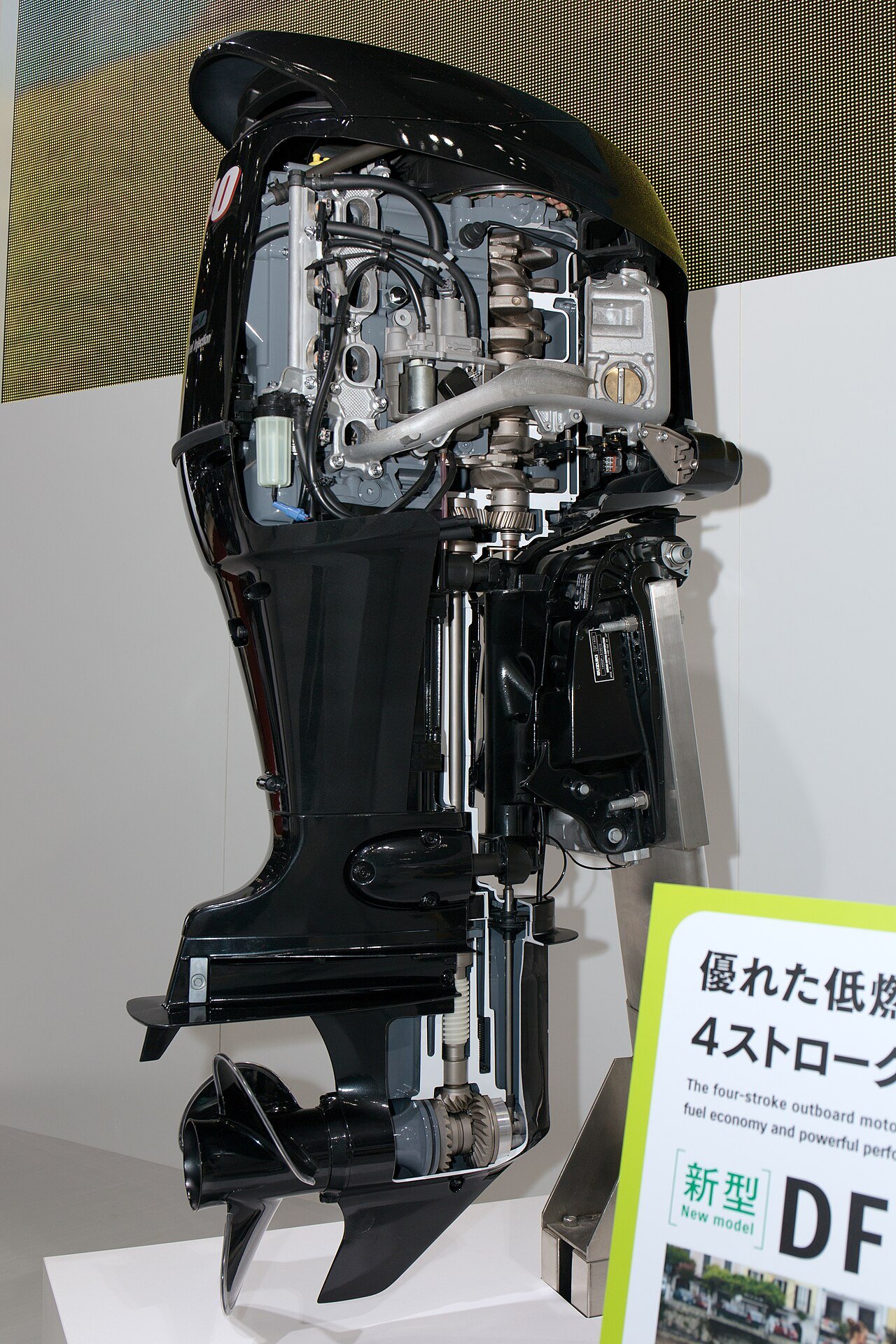
A Suzuki 115 hp outboard today is the DF115B: a 2.0-litre (2,045 cc) inline four-cylinder four-stroke weighing 188 kg with a 20-inch shaft or 192 kg with a 25-inch shaft, with a 2.59:1 two-stage gearcase, a 40 A alternator and Suzuki’s Lean Burn fuel control (Suzuki Marine: DF115B specifications). It replaced the DF115A, and Suzuki says the update brought up to 10% better fuel efficiency at cruise. We stock 11 versions from $8,725 to $9,735, in 20 and 25-inch shafts, standard and counter rotation, black, white and SS Series matte black, and we deliver them worldwide.
This guide covers what changed with the B series, how to read the model codes, which boats the engine suits, how it compares with the Mercury 115 and Yamaha F115, and what to check before you order. If you know what you need, jump to the price list or browse the Suzuki 115 HP category.
Table of Contents
Table of Contents
Why the 115 Class Matters
The 115 is one of the most common outboards on the water. It’s the standard engine on a huge range of 17 to 20-foot centre consoles, bay boats, aluminium fishing boats and pontoons, and it’s often the most horsepower a boat in that size range is rated for. That makes it a very common repower too.
A Suzuki 115 hp outboard sits in the middle of the field on weight and at the top of the field on displacement. Suzuki uses a 2.0-litre block, where Yamaha uses 1.8 litres and Mercury 2.1 litres. That bigger block, combined with very low gearing, is why Suzuki 115s have a reputation for pulling heavy boats well.
The current version, the DF115B, arrived in two steps. In July 2020 Suzuki announced the drive-by-wire DF115BG and DF140BG, which it described as the first 115 and 140 hp four-strokes in the world with drive-by-wire controls, based on its own research at the time (Suzuki global news, July 2020). The mechanical DF115B and DF140B followed, replacing the DF115A and DF140A and carrying over most of the same updates (Suzuki Marine Australia: new DF115B and DF140B). The DF115B mechanical engine is what most of our stock is built around.
Suzuki 115 HP Outboard Specifications
These are Suzuki’s published figures for the mechanical DF115B.
| Specification | Suzuki DF115B |
|---|---|
| Engine | Inline 4-cylinder, DOHC 16-valve |
| Displacement | 2,045 cc |
| Bore x stroke | 86 x 88 mm |
| Compression ratio | 10.6:1 |
| Output | 84.6 kW (115 hp) |
| Full-throttle range | 5,000 to 6,000 rpm |
| Fuel system | Electronic fuel injection with Lean Burn |
| Recommended fuel | RON 91 / AKI 89 |
| Gear ratio | 2.59:1, two-stage reduction |
| Alternator | 12 V, 40 A |
| Dry weight | 188 kg (L, 20 in) / 192 kg (X, 25 in) |
| Recommended transom | 508 mm (L) / 635 mm (X) |
| Oil pan capacity | 5.5 L |
| Propeller pitch range | 15 to 25 in standard; 17 to 23 in counter |
| Controls | Mechanical (DF115BG: drive-by-wire) |
| Trim | Power trim and tilt |
Figures from Suzuki Marine Australia’s DF115B page. Dry weights exclude oil and propeller. Check your owner’s manual for the fuel and ethanol limits that apply in your market.


What Changed From DF115A to DF115B
If you’re comparing a new DF115B Suzuki 115 hp outboard with an older DF115A, these are the changes Suzuki lists:
- Higher compression. Up from 9.7:1 to 10.6:1. Suzuki says this improves top speed and acceleration.
- Better Lean Burn. Suzuki’s tests showed as much as 10% better fuel efficiency from mid-range to high cruising speeds compared with the A series.
- New cowl and intake. A redesigned air intake separates water better, and a silencer-resonator system reduces intake noise.
- Cooler gearcase. An optimised gear-oil passage lowers gear oil temperature, which helps the gearcase last.
- Easier servicing. The oil filter can be changed by removing just the upper cover, with an oil spill catcher to keep things clean.
- More protection. A water-detecting fuel filter, a larger fuel pump, a better-placed O2 sensor and zinc-coated rust-proof fasteners.
Suzuki also lists a higher alternator output, its Suzuki Edge eCoat anodizing and the Suzuki Micro Plastic Collecting Device, a filter on the cooling water return that collects small plastic particles from the water as you run. It’s a small thing, but it’s a nice touch.
Bottom line: for most buyers, a new Suzuki 115 hp outboard in the B series is the better buy than an A-series engine, even at a similar price.
The Technology That Matters
Lean Burn Control
Lean Burn predicts how much fuel the engine needs from its sensors and runs a leaner mixture when the load is light, mainly at cruise. On the 115 this is where most of the B series’ fuel saving comes from. Our article on how Suzuki Lean Burn works explains it in more depth.
Two-stage gear reduction
Suzuki reaches its 2.59:1 ratio in two steps, which is unusually low for a 115. The engine can swing a larger-diameter prop than most rivals, and that helps a heavy boat get out of the hole and hold a plane at lower speeds. It’s the main reason Suzuki 115s are popular on pontoons and loaded aluminium boats.
Offset driveshaft
The offset driveshaft moves the powerhead forward, putting the engine’s weight closer to the transom. That improves balance and helps the boat sit level.
Direct ignition and water detection
Direct ignition puts a coil on each plug for a stronger spark. The water-detecting system warns you before water in the fuel reaches the engine, which matters if you buy fuel in places where quality varies.
How to Read Suzuki 115 HP Outboard Model Codes
Take DF115BTXZW5 as an example:
- DF115: 115 hp four-stroke
- B: the current B series. A means the earlier A series
- T: power trim and tilt with mechanical controls. G (as in DF115BG) means the drive-by-wire version
- L = 20-inch shaft, X = 25-inch shaft
- Z: counter rotation
- W: white cowl. No letter means Pearl Nebular Black
- SS: SS Series matte black
- 5: model-year suffix
So a DF115BTXZW5 is a white, 25-inch, counter-rotating Suzuki 115 hp outboard with mechanical controls. Our guide to understanding Suzuki outboard model numbers covers the full range, and long shaft vs short shaft outboard motors shows how to measure your transom.
Every Suzuki 115 HP Outboard We Sell
These are the Suzuki 115 hp outboard listings live on our site right now. Prices are in US dollars and include delivery. Click any model for photos and the full spec sheet.
DF115B: current generation, mechanical controls
| Model | Shaft | Rotation | Finish | Price |
|---|---|---|---|---|
| DF115BTLW5 | 20 in | Standard | White | $9,125 |
| DF115BTLSS5 | 20 in | Standard | SS matte black | $9,170 |
| DF115BTX5 | 25 in | Standard | Pearl Nebular Black | $9,045 |
| DF115BTXW5 | 25 in | Standard | White | $9,185 |
| DF115BTXSS5 | 25 in | Standard | SS matte black | $9,230 |
| DF115BTXZ5 | 25 in | Counter | Pearl Nebular Black | $9,300 |
| DF115BTXZW5 | 25 in | Counter | White | $9,440 |
| DF115B (shaft to order) | 20 or 25 in | Standard | Pearl Nebular Black | $8,725 |
| DF115SS (shaft to order) | 20 or 25 in | Standard | SS matte black | $9,735 |


DF115A: earlier generation
| Model | Shaft | Finish | Price |
|---|---|---|---|
| DF115A (shaft to order) | 20 or 25 in | Black | $8,725 |
| DF115ATX | 25 in | Black | $9,735 |
The A-series engines use the earlier 2,044 cc block without the B series’ higher compression and other updates. The DF115ATX is currently listed above the price of a new DF115BTX5, so unless you need an exact like-for-like match for an existing A-series engine, we’d point you to the B series.


For a twin, pair the DF115BTX5 with the DF115BTXZ5, or the white DF115BTXW5 with the DF115BTXZW5. If you want the drive-by-wire DF115BG, ask us about availability. Prices move with stock; the product page shows the current figure.
Which Boats Suit a Suzuki 115 HP Outboard?
Centre consoles and dual consoles, 17 to 20 feet. This is the classic home for a single Suzuki 115 hp outboard. It’s enough to run a family or a few anglers nearshore at a sensible cruise. Our guide on which Suzuki outboard is best for a 20ft boat helps you narrow it down.
Aluminium fishing boats and multi-species boats. Many 17 to 19-foot aluminium hulls are rated at 115, and a Suzuki 115 hp outboard is a natural fit. The low gearing helps when the boat is loaded with people, gear and fuel.
Bay boats and flats boats, 17 to 19 feet. The SS Series matte black versions are popular here. A light bay boat with a Suzuki 115 hp outboard is a nimble, economical setup.
Pontoons, 20 to 23 feet. A 115 is one of the most common pontoon engines. It gives decent cruising speed and enough grunt for light towing. See the pontoon section below.
Bass boats. Smaller bass boats rated around 115 can use it well; read which Suzuki outboard is best for bass fishing.
Twin-engine small catamarans and work boats. Twin 115s turn up on small power cats, RIBs and workboats. The counter-rotating Z models make the pair.
Where it’s the wrong choice: boats rated well below 115 (look at the Suzuki 90 HP category), and heavier boats that really want 140 or 150.
Three Buying Scenarios
Here’s how we’d think through a Suzuki 115 hp outboard purchase in three common situations. These are examples of the reasoning, not quotes for a specific boat.
An 18-foot aluminium centre console repower
The boat has a tired 115 two-stroke on a 20-inch transom and working mechanical controls. The owner fishes lakes and estuaries.
A DF115BTLSS5 or DF115BTLW5. The 20-inch shaft matches the transom, the controls can usually be adapted, and the owner gains fuel economy and quiet running. Budget for Suzuki gauges and a prop matched to the 2.59:1 gearing.
A 21-foot family pontoon
The pontoon is rated for 115, has a 25-inch motor pod and is used for cruising and tubing.
A DF115BTXW5 in white to match the deck, or the black DF115BTX5. A four-blade aluminium prop with modest pitch usually suits.
A 19-foot bay boat
The owner wants a fast hole shot in shallow water and a clean look.
The DF115BTXSS5 or DF115BTLSS5, depending on transom height and whether the boat has a jack plate.
Setting Up a Suzuki 115 on a Pontoon
Pontoons are probably the single biggest market for a Suzuki 115 hp outboard, and they need a slightly different setup from a V-hull.
- Shaft. Most pontoon motor pods take the 25-inch X shaft. Measure from the mounting surface to the bottom of the tubes before ordering.
- Prop. Pontoons push a lot of water. A four-blade prop at lower pitch usually gives better hole shot, better grip in turns and better towing. Suzuki’s low 2.59:1 gearing helps here.
- Trim. Many pontoons, especially tritoons, run best with the engine trimmed slightly up at cruise. Try trim before changing props.
- Rating. Check the capacity plate. Many twin-tube pontoons top out below 115; this engine is often a better match for larger twin-tube and tritoon models.
- Colour. White engines are popular on pontoons. We stock the DF115BTXW5 for that reason.
Our guides to outboard motors for pontoons and best Suzuki outboards for pontoon boats go further.
Twins and Counter Rotation
Twin Suzuki 115 hp outboard setups are less common than singles, but they make sense on small catamarans and some workboats.
- Rotation. Pair a standard engine with a counter-rotating Z model so the props cancel each other’s torque.
- Matching. Same shaft length, same prop model and pitch, ideally the same model year. Don’t pair a DF115A with a DF115B.
- Props. Suzuki lists counter-rotation props from 17 to 23 inches of pitch for the DF115B.
- Spacing. Follow Suzuki’s installation guide for engine centres and check full steering lock.
Our twin outboard motor setup and counter rotating outboard motor guides go deeper.
Aluminium Boats and Big Jon Boats
A lot of Suzuki 115 hp outboard engines end up on aluminium hulls: deep-V fishing boats, multi-species boats, big jon boats and welded workboats. These boats have a few things in common that affect setup.
- They carry weight. Anglers load them with batteries, trolling motors, livewells, fuel and gear. Suzuki’s low gearing and 2.0-litre block are well suited to pushing that load.
- Transom heights vary. Many aluminium boats use a 20-inch transom, but plenty of larger ones are 25-inch. Measure rather than assume.
- Corrosion watch. Aluminium hulls and aluminium outboard housings are both vulnerable to galvanic corrosion if anodes are worn or wiring is poor. Keep anodes fresh and make sure the engine and hull bonding is sound.
- Shallow water. If you run skinny water, a jack plate and a careful prop choice help. Suzuki’s lower unit design and power trim and tilt let you run trimmed up in the shallows, within reason.
Our guide to outboard motors for jon boats and fishing boat motors cover these hulls in more depth, and our outboard motor maintenance checklist covers anode checks and corrosion protection.
Controls, Gauges and the DF115BG
The DF115B is a mechanical engine. It works with Suzuki binnacle or side-mount controls and cables. If your boat already has Suzuki mechanical controls in good shape, a new Suzuki 115 hp outboard can often use them; controls from another brand won’t fit.
Suzuki also builds the DF115BG, the drive-by-wire version. It replaces the cables with Suzuki Precision Control electronic throttle and shift, which gives smoother shifting and makes dual helms or a tower station easier to rig. When Suzuki launched it in 2020, it said it was the first 115 hp four-stroke in the world to offer drive-by-wire. If you’re building a new helm or want digital controls, ask us about the BG.
Whatever controls you use, good gauges are worth having. Suzuki’s digital gauges, or a multifunction display that reads engine data over NMEA 2000, show rpm, trim, fuel flow and warnings in one place. The fuel-flow reading alone helps you find your boat’s best cruise speed and save fuel every trip. See our guide to outboard motor accessories for gauges and rigging parts.
Freshwater or Saltwater?
A Suzuki 115 hp outboard is built for both. Suzuki applies its anti-corrosion finish, and the B series adds zinc-coated rust-proof fasteners and Suzuki Edge eCoat anodizing. That said, salt water is hard on any engine.
In salt water, flush with fresh water after every trip, rinse the outside of the engine, tilt it up when moored where possible and check the anodes regularly. In fresh water, corrosion is less of a worry, but the cooling system can pick up silt and weed, so flush after muddy runs and keep an eye on the water pump. Our guides to saltwater outboard motors, freshwater outboard motors and Suzuki outboards for freshwater lakes have full routines.
Why Buyers Pick Suzuki at 115
When people ask why they’d pick a Suzuki 115 hp outboard over the other big names, the honest answers from the specs are:
- Gearing. At 2.59:1, it’s the lowest of the main 115s, which suits heavy boats and pontoons.
- Displacement. A 2.0-litre block gives relaxed low-end torque.
- Charging. 40 A is better than Yamaha’s 35 A.
- Updated design. The B series brought higher compression, better Lean Burn and easier servicing.
- Price. Our current Suzuki 115 hp outboard prices start under $9,000.
And the honest trade-off: it’s heavier than the Mercury and Yamaha 115s. If you have a very light hull where every kilo counts, weigh that up. For more on the brand, read top reasons to buy Suzuki outboard motors and why more boaters are switching to Suzuki.
Check Your Boat Before You Order
1. Horsepower rating
Before you order a Suzuki 115 hp outboard, find the boat’s maximum horsepower on the capacity plate or builder’s spec sheet. In the United States, monohulls under 20 feet must carry a capacity plate, and the horsepower formula is set in federal rules (33 CFR 183.53, horsepower capacity). Larger boats usually carry a builder or industry plate (Discover Boating: all about capacity plates). Other countries have their own rules; don’t exceed the rating.
2. Shaft length
Measure from the top of the transom to the bottom of the hull at the centreline. Suzuki recommends 508 mm (20 in) for L and 635 mm (25 in) for X.
3. Transom weight
At 188 to 192 kg, the DF115B is heavier than both its main rivals: Yamaha lists its F115 at 173 to 177 kg, and Mercury’s 115 weighs 359 lb (163 kg) on a 20-inch shaft. On a pontoon or loaded aluminium boat that rarely matters. On a very light skiff, check how the boat sits at rest.
4. Controls and gauges
The DF115B uses mechanical controls. If your boat has a Suzuki binnacle in good condition, it may carry over; controls from other brands won’t. Budget for gauges or a display that reads engine data.
5. Fuel system and batteries
Check fuel lines, the water-separating filter and the tank vent. Fit correctly sized battery cables.
What to Expect on the Water
On a typical 17 to 19-foot centre console or aluminium boat with two or three people aboard, a well-propped Suzuki 115 hp outboard should plane quickly, cruise comfortably somewhere in the mid-20s mph and top out somewhere around the low 40s mph. That’s a rough guide based on what 115 hp engines generally achieve on hulls this size, not a promise for your boat. Mercury’s published factory test of its own 115 on an 18 to 21-foot boat, covered in the comparison below, landed in the same range.
On a pontoon, expect lower top speeds, because pontoons push more water. A 20 to 23-foot pontoon with a Suzuki 115 hp outboard is usually a relaxed cruiser rather than a speed machine, and that’s what most pontoon owners want. The low gearing helps it pull a tube or a skier out of the water without labouring.
The real numbers for your exact hull are in the builder’s performance bulletin, which most builders publish with speed, rpm and fuel flow at each step. If you can’t find one, ask us and tell us the make and model; we’ll tell you what we know.
Suzuki 115 vs Mercury and Yamaha
The three most common 115s take different approaches. Here’s how a Suzuki 115 hp outboard lines up with Mercury’s FourStroke 115 and Yamaha’s F115.
| Suzuki DF115B | Mercury FourStroke 115 | Yamaha F115 | |
|---|---|---|---|
| Displacement | 2,045 cc | 2.1 L | 1,832 cc |
| Dry weight (lightest) | 188 kg (414 lb) | 359 lb (163 kg) | 173 to 177 kg |
| Gear ratio | 2.59:1 | 2.07:1 (Command Thrust 2.38:1) | 2.15:1 |
| Alternator | 40 A | Not stated in source | 35 A |
| Full-throttle range | 5,000 to 6,000 rpm | Up to about 6,000 rpm | 5,300 to 6,300 rpm |
Mercury figures from The Fisherman’s review (The Fisherman: Mercury 115 hp 2.1-litre FourStroke); Yamaha figures from Yamaha’s own fact sheet (Yamaha F115 fact sheet, PDF). Model years differ slightly, so compare the exact versions you’re looking at.
What it means in practice:
- Weight. Mercury’s 115 is the lightest, then Yamaha, then Suzuki. On a small, light hull, that difference matters. On a pontoon or a loaded aluminium boat, it matters much less.
- Gearing. Suzuki’s 2.59:1 is clearly the lowest. It lets the Suzuki swing a larger prop, which tends to help heavy boats, pontoons and anything that carries a lot of weight.
- Charging. Suzuki’s 40 A beats Yamaha’s 35 A, which helps if you run a few electronics.
- Displacement. Suzuki and Mercury both run bigger blocks than Yamaha, which usually means more relaxed low-end torque.
For context, Mercury’s own factory tests of its 115 on an 18 to 21-foot boat showed around 43 mph at full throttle and about 5.4 mpg at cruise, as reported by The Fisherman. A Suzuki 115 hp outboard on a similar hull will usually land in a similar range, but the hull, load and prop matter more than the badge.
For more on the rivals, read our Mercury 115hp outboard, Yamaha 115HP outboard and Honda 115 HP outboard guides, plus Suzuki vs Yamaha and Suzuki vs Mercury. Honest advice: the best engine is often the one with a good dealer near where you keep the boat.
90, 115 or 140?
Suzuki 115 vs 140. The DF140B uses the same 2,045 cc block as the DF115B, with the same layout and updates. So if your boat is rated for 140, stepping up gives you 25 more horsepower with little or no weight penalty. If your boat is rated for 115, the 115 is the right engine. Browse the Suzuki 140 HP category or read our Suzuki 140hp outboard guide.
Suzuki 115 vs 150. The DF150A uses a bigger 2.9-litre block and weighs around 235 to 241 kg, so it’s a heavier step up. It suits boats rated for 150 that need the extra torque. See our Suzuki 150 hp outboard guide.
Suzuki 90 vs 115. If your boat is rated around 90 or the 115 would be overkill, look at our Suzuki 90hp outboard guide and the Suzuki 90 HP category.


Repowering With a Suzuki 115 HP Outboard
The Suzuki 115 hp outboard is one of the most popular repower engines in its class. Points to watch:
- From an old 115 two-stroke. The Suzuki will usually be heavier. Check how the boat floats at rest. You’ll gain a lot in fuel economy, smoke, noise and easier starting.
- From an older Suzuki DF115A. Mounting should be straightforward. You gain the B series’ higher compression and better Lean Burn.
- From another brand. Budget for Suzuki controls, harness and gauges. Old controls from another make won’t work.
Our guides to boat engine replacement, outboard motor upgrades and boat motor installation service walk through the costs and the job itself.
Props, Trim and Steering
A Suzuki 115 hp outboard should reach 5,000 to 6,000 rpm at full throttle with a normal load. If it can’t, the prop pitch is too high. If it runs past 6,000, the pitch is too low. Suzuki lists standard props from 15 to 25 inches of pitch for the DF115B. Start with the builder’s recommendation, then adjust by an inch at a time.
Trim down to get on plane, then trim up until speed stops rising at a fixed rpm, then back off slightly. On pontoons and heavy aluminium boats, a four-blade prop often gives better grip and hole shot; on lighter bay boats, a three-blade stainless prop often gives more top end.
For steering, hydraulic steering is the comfortable choice at 115 hp, especially on bigger boats. Cable steering is still common on smaller hulls but can feel heavy. Our guides to outboard motor propellers, outboard motor gear ratio, power trim and tilt and hydraulic steering for outboard motors cover each in detail.
Fuel Use and Electrics
Nobody can give you an exact fuel figure for a Suzuki 115 hp outboard on your boat without running it on your boat. What’s clear is that consumption per mile drops sharply between full throttle and a steady cruise, and that cruise band is where Lean Burn and the B series’ 10% improvement are aimed.
To stretch your range: trim properly, keep the hull and prop clean, don’t carry fuel and water you don’t need, and use a fuel-flow gauge to find your boat’s most efficient cruise rpm. See fuel-efficient outboard motors and why Suzuki outboards are known for fuel efficiency.
The 40 A alternator handles a typical setup with a fish finder, a chartplotter, a VHF and bilge pumps. If you run a bow-mount trolling motor, charge its batteries from shore power or an onboard charger, not the outboard. Keep a separate cranking battery and use correctly sized cables. If a warning light shows, understanding Suzuki outboard warning lights explains each one.
What a Suzuki 115 HP Outboard Costs
Our Suzuki 115 hp outboard prices run from $8,725 to $9,735, delivered. For the current DF115B with a specific shaft, rotation and finish, prices run from $9,045 to $9,440. What moves the price:
- Rotation. The counter-rotating BTXZ adds about $255 over the standard BTX.
- Finish. White adds about $140; SS Series matte black about $185.
- Shaft. 20 and 25-inch versions are priced within about $60 of each other.
Remember what isn’t in the engine price: propeller, controls, gauges, steering, rigging kit, batteries and installation. Our article on hidden costs when buying an outboard motor lists them, and outboard motor financing explains how buyers spread the cost.
Suzuki Marine Australia lists a 3-year recreational warranty on the DF115B, with a further 3 years if the engine is serviced on schedule by an authorised dealer. Warranty terms differ by country and use, so check the paperwork that comes with your engine. Our page on outboard motors under warranty explains what’s usually covered.
New or Used?
Used 115s are everywhere, which makes them tempting. If you look at a used Suzuki 115 hp outboard, ask for:
- Engine hours and a diagnostic report from Suzuki’s dealer software showing any overheat or over-rev events.
- Service records for oil, gearcase oil, plugs, filters and the water pump.
- A compression test across all four cylinders.
- A look at the gearcase oil: milky means water, metal flakes mean wear.
- The serial number, to confirm the model year and whether it’s an A or B series engine.
Our guides to the outboard motor compression test, identifying a Suzuki outboard by serial number and used Suzuki outboard motors walk through the checks. With new prices starting under $9,000, the gap to a good used engine is often smaller than people expect.
Buying and Worldwide Delivery
Ordering a Suzuki 115 hp outboard from us works like this:
- Pick your engine from the Suzuki 115 HP category, checking series, shaft, rotation and finish.
- Not sure? Contact us with your boat’s make, length, transom height and current engine.
- We crate and ship the engine. Under our shipping policy, orders usually ship within 1 to 6 business days and delivery is free.
- You get a confirmation email with tracking, which you can follow on our order tracking page.
Import duties and taxes depend on your country, so check with your customs office or a freight agent first. Our guides on outboard motors worldwide shipping and the cost of shipping an outboard motor internationally explain each step. Read how to verify genuine Suzuki engines and our returns policy before you buy.
Break-In, Servicing and Storage
A new Suzuki 115 hp outboard needs a proper break-in. Follow the schedule in your owner’s manual: vary the throttle and avoid long spells at one speed or at full throttle in the first hours. Our outboard motor break-in period guide explains why.
After that, stick to the manual’s intervals for oil and filter, gearcase oil, plugs, fuel filters, anodes and the water pump impeller. The oil pan holds 5.5 litres, and on the B series the filter is reachable by removing only the upper cover. Our guides to Suzuki outboard maintenance, Suzuki outboard oil change, Suzuki outboard spark plugs and Suzuki outboard impeller replacement cover each job.
In salt water, flush after every trip and check the anodes; in fresh water, flush after muddy runs. Before winter storage, stabilise the fuel, change the oil, drain the cooling system and store the engine trimmed down. See using a Suzuki outboard in saltwater and winterizing a Suzuki outboard.
Mistakes to Avoid
- Paying more for the old A series. Unless you need an exact match, the DF115B is the better engine.
- Getting the shaft wrong. Measure, don’t guess. Pontoons are usually X; small skiffs are often L.
- Reusing an old prop. It rarely suits Suzuki’s 2.59:1 gearing.
- Two standard-rotation engines on a twin. Pair a BTX with a BTXZ.
- Exceeding the boat’s rating. It can make the boat unsafe and void your insurance.
- Charging a trolling motor from the outboard. Use a dedicated charger.
Frequently Asked Questions
How much does a Suzuki 115 hp outboard weigh?
The DF115B weighs 188 kg (414 lb) with a 20-inch shaft and 192 kg (423 lb) with a 25-inch shaft, dry, without oil or propeller.
What engine is in the Suzuki 115 hp outboard?
A 2,045 cc (2.0-litre) inline four-cylinder with 16 valves and dual overhead cams, with a 10.6:1 compression ratio on the B series.
What’s the difference between the DF115A and DF115B?
The DF115B has higher compression (10.6:1 vs 9.7:1), improved Lean Burn with up to 10% better cruise economy in Suzuki’s tests, a new cowl and intake, a cooler-running gearcase and easier oil filter access.
What gear ratio does the Suzuki 115 use?
2.59:1, through Suzuki’s two-stage gear reduction. That’s lower than Mercury’s 2.07:1 and Yamaha’s 2.15:1, and it helps the Suzuki swing a larger prop.
What fuel does a Suzuki 115 hp outboard need?
Suzuki recommends RON 91 / AKI 89. Follow the fuel and ethanol limits in your owner’s manual.
What size boat suits a Suzuki 115 hp outboard?
Typically 17 to 20-foot centre consoles, bay boats and aluminium fishing boats, and pontoons of about 20 to 23 feet. Always stay within the boat’s horsepower rating.
Is the Suzuki 115 good for a pontoon?
Yes. Its low gearing suits the bigger props pontoons like, and it’s one of the most common pontoon engines. Use the 25-inch shaft for most pontoon pods and check the boat’s rating.
Does Suzuki make a drive-by-wire 115?
Yes, the DF115BG uses Suzuki Precision Control drive-by-wire. Our current stock is the mechanical DF115B; contact us about BG availability.
Can I run twin Suzuki 115 hp outboards?
Yes. Pair a standard DF115BTX with a counter-rotating DF115BTXZ, with matching shafts and props.
Should I buy the Suzuki 115 or the 140?
The DF140B shares the same 2,045 cc block, so if your boat is rated for 140 you get more power with little weight penalty. If it’s rated for 115, buy the 115.
Do you ship a Suzuki 115 hp outboard worldwide?
Yes. Delivery is free, and orders usually ship within 1 to 6 business days. Import duties and taxes in your country are your responsibility.
How long does a Suzuki 115 hp outboard last?
Suzuki doesn’t publish a lifespan, and nobody can honestly predict one for your boat. Correct propping, a proper break-in, regular servicing and good flushing matter far more than the badge. Our article on how long Suzuki outboards last goes into it.
Order Your Suzuki 115 HP Outboard
If your boat is rated for 115, a Suzuki 115 hp outboard gives you a 2.0-litre engine with the lowest gearing in its class, a 40 A alternator and the updated B-series Lean Burn. It’s a strong match for pontoons, aluminium fishing boats and small centre consoles. Browse every Suzuki 115 HP outboard in stock, see the full range of Suzuki outboards, or send us your boat’s details and we’ll tell you which model fits. Our buy Suzuki outboards and Suzuki outboards for sale guides cover the rest of the line-up.
Sources and References
- Suzuki Marine Australia: DF115B specifications
- Suzuki Marine Australia: new DF115B and DF140B range
- Suzuki global news: DF115BG and DF140BG announcement (July 2020)
- The Fisherman: Mercury 115 hp 2.1-litre FourStroke
- Yamaha Motor Europe: F115 fact sheet (PDF)
- Cornell LII: 33 CFR 183.53, horsepower capacity
- Discover Boating: all about capacity plates
Posts Widget
-
1

-
2

-
3

-
4


S.H Continental Marine
USA HERALD MAGAZINE INC
Our team is dedicated to providing exceptional customer service.
Email: info@shcontinentalmarine.com
Choose S.H Continental Marine
for your outboard engine needs and enjoy superior quality, exceptional customer service, and unbeatable prices.